

10. 17. 2026
Diagnostic Scan vs Mechanic Inspection Explained
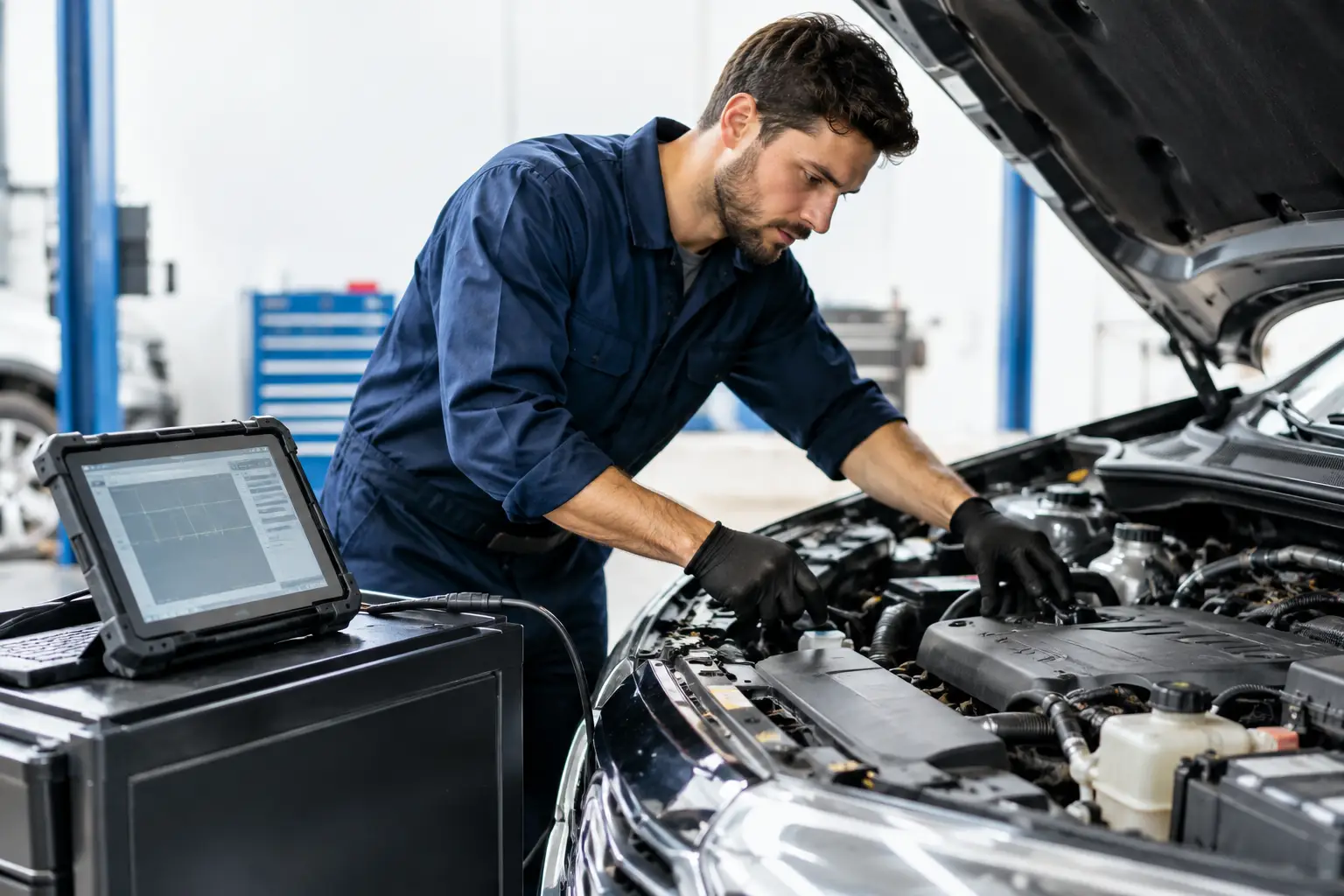
A check engine light can feel like a direct answer, but it is really the start of the conversation. In the diagnostic scan vs mechanic inspection decision, the right choice depends on what your vehicle is doing, what warning lights are on, and whether the problem can be confirmed by a computer alone.
For North Houston drivers, the goal is not to pay for more service than you need. It is to identify the real issue, understand the repair, and get back on the road safely. A scan and an inspection often work best together, but they serve different purposes.
What a Diagnostic Scan Actually Does
A diagnostic scan connects a professional scan tool to your vehicle’s onboard computer system. Modern cars monitor hundreds of readings from sensors, switches, modules, and emissions components. When the system detects a reading outside its expected range, it may store a trouble code and turn on the check engine light or another dashboard warning.
The scan tool retrieves those codes and can show live data, such as engine temperature, oxygen sensor activity, battery voltage, fuel trim, misfire counts, and transmission information. This gives a technician a useful direction quickly.
For example, a code may point to a cylinder misfire, an evaporative emissions leak, a wheel-speed sensor problem, or a charging-system concern. That information matters, especially when a warning light is active or your car has lost power, runs rough, stalls, or has poor fuel economy.
Still, a trouble code is not the same as a confirmed failed part. A code identifies the system that reported a problem. It does not always identify the root cause.
A code related to an oxygen sensor, for instance, could be caused by the sensor itself. It could also result from damaged wiring, a vacuum leak, an exhaust leak, a fuel-delivery issue, or an engine condition that is affecting the sensor reading. Replacing parts based only on a code can waste time and money.
When a Scan Is the Best First Step
A professional diagnostic scan is usually the right place to begin when the check engine light, ABS light, battery light, airbag light, traction-control light, or another warning light comes on. It is also helpful for intermittent electronic issues, such as a no-start condition, a dashboard message, or features that work only some of the time.
The scan can quickly reveal stored, pending, and history codes. Pending codes are especially useful because they can show a developing issue before the warning light stays on. For a commuter who depends on a vehicle every day, catching a small issue early can help prevent a larger repair later.
What a Mechanic Inspection Adds
A mechanic inspection is a hands-on evaluation of the vehicle. Rather than reading only what the computer sees, a trained technician looks, listens, measures, and tests the components that affect safety, reliability, and performance.
This may include checking fluid condition and leaks, tire wear and pressure, brakes, steering and suspension parts, belts and hoses, battery connections, filters, lights, and visible wiring. Depending on the concern, the technician may also road-test the vehicle, inspect it on a lift, test charging output, check fuel pressure, or verify mechanical engine condition.
A thorough inspection can find problems that will never trigger a dashboard light. Worn brake pads, uneven tire wear, a loose suspension component, a leaking shock, a failing wheel bearing, or a minor coolant leak may not create a computer code. Yet each can affect safety, ride quality, or the life of your vehicle.
When an Inspection Matters More Than a Scan
If you hear a grinding brake noise, feel vibration in the steering wheel, notice your car pulling to one side, see fluid under the vehicle, or have uneven tire wear, a physical inspection is usually more valuable than a scan alone. These concerns often involve mechanical parts that are not closely monitored by the computer.
The same is true if your vehicle is due for routine maintenance, preparing for a road trip, or being considered for a used-car purchase. A complete inspection offers a practical snapshot of the vehicle’s condition and helps you plan for upcoming maintenance rather than being surprised by it.
Houston-area heat also puts extra demand on batteries, cooling systems, tires, and air conditioning. An inspection can catch corrosion at battery terminals, aging belts, low coolant, or tire damage before a hot afternoon turns a minor concern into a roadside problem.
Diagnostic Scan vs Mechanic Inspection: The Key Difference
The clearest difference is this: a diagnostic scan reads electronic information from the car, while a mechanic inspection evaluates the physical condition and operation of the vehicle.
Think of a scan as a clue from the vehicle’s computer. Think of an inspection as the confirmation process. A good technician uses both when needed, rather than treating a code as an automatic parts list.
Consider a check engine light caused by a misfire. The scan may identify the cylinder with the misfire and show how often it occurs. The mechanic then inspects the spark plug, ignition coil, wiring, fuel injector operation, vacuum system, and potentially engine compression. That step-by-step process is what separates an accurate diagnosis from guesswork.
On the other hand, if your brake pedal feels soft but there are no warning lights, the repair process starts with an inspection. The technician may find worn pads, a fluid leak, air in the brake lines, or an issue with a brake component. A scan could still be used if an ABS concern is involved, but it would not replace the physical brake evaluation.
Why Both Services Are Often Needed
Many vehicle problems cross the line between electronics and mechanical systems. A battery light can relate to an alternator that is not charging correctly, but the cause may be a weak battery, loose connection, damaged cable, worn drive belt, or an internal alternator problem. Testing and visual inspection work together to find the answer.
Likewise, an ABS warning light may produce a wheel-speed sensor code. The sensor could be defective, but it could also be affected by wiring damage, corrosion, a damaged tone ring, or a worn wheel bearing. The scan tells the technician where to investigate. The inspection determines what actually needs repair.
This approach protects your budget. It helps avoid replacing a sensor, module, or other part simply because a code mentioned it. It also helps avoid overlooking a mechanical issue because the computer did not report it.
What to Tell Your Technician
The more detail you can share, the faster a technician can narrow down the cause. Mention when the problem started, whether it happens only when the engine is cold or hot, if it occurs at certain speeds, and whether any warning lights came on.
Describe sounds in plain language. A squeal, clunk, clicking noise, grinding sound, or humming vibration can each point toward different systems. Also mention recent repairs, accidents, battery replacements, jump-starts, or work performed by another shop. These details are useful, not inconvenient.
If a warning light is flashing, the vehicle is overheating, the brakes feel unsafe, or the engine is making loud mechanical noise, do not keep driving just to see if it goes away. A flashing check engine light can indicate an active misfire that may damage the catalytic converter. An overheating engine can suffer serious damage quickly.
Choosing the Right Service Without Guessing
If you have an active warning light or an electronic performance concern, ask for diagnostic testing. If the issue is noise, handling, braking, tire wear, leakage, or routine vehicle condition, start with an inspection. When symptoms overlap, request a professional evaluation that includes the appropriate scan and hands-on testing.
A trustworthy shop should explain what was found, why it matters, what should be repaired now, and what can be monitored. You deserve clear recommendations, not pressure. At Firestone1960, the focus is on helping drivers make informed decisions with dependable service, fair guidance, and repairs that fit the real condition of the vehicle.
Your car rarely gives a perfect warning when something begins to fail. Paying attention to a new light, sound, smell, vibration, or change in performance gives your technician the chance to solve a smaller problem before it interrupts your schedule or compromises your safety.
Social Share:


No Comment Yet! You can post first response comment.