

05. 24. 2026
How to Read Tire Wear Patterns
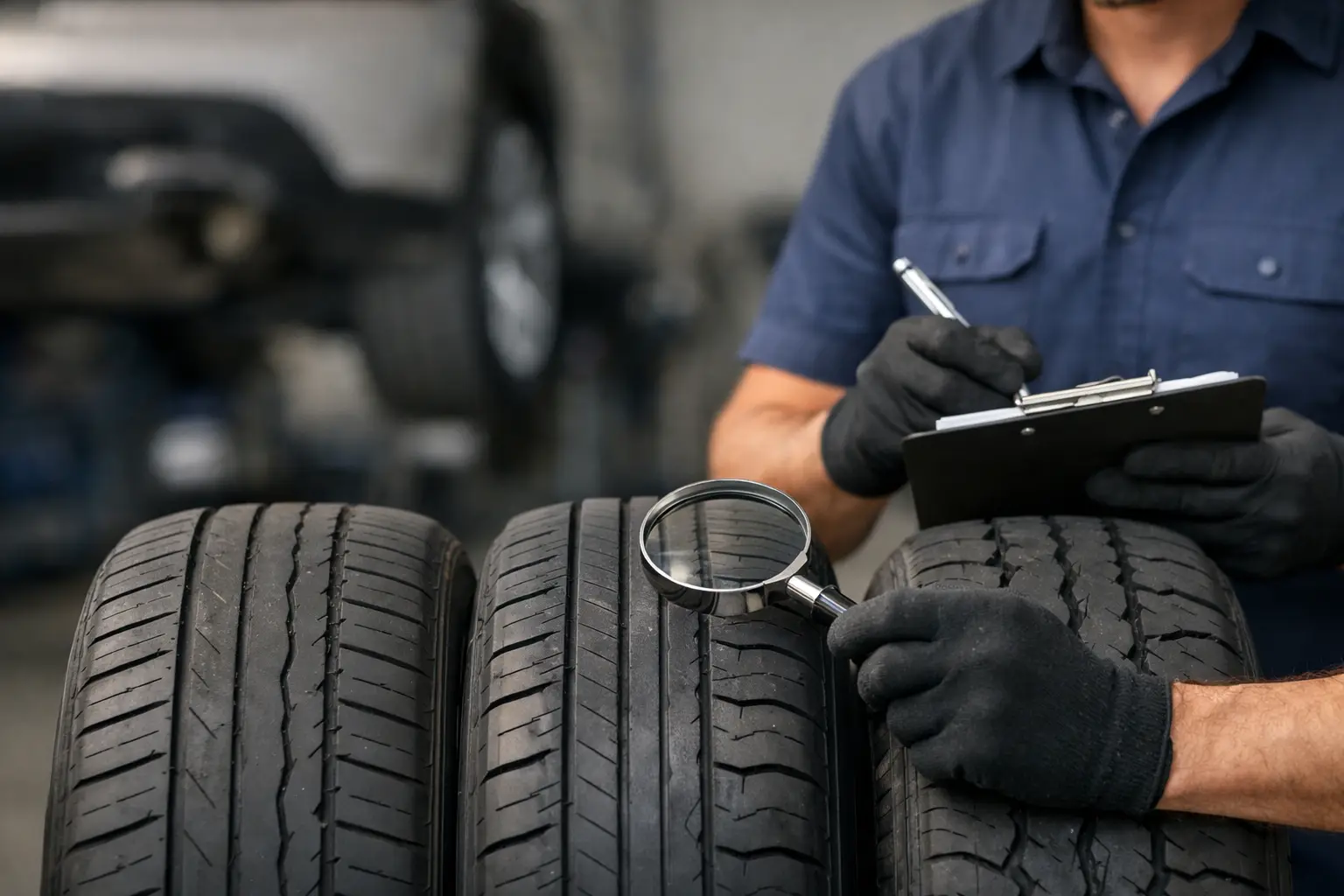
A quick look at your tires can tell you a lot about what your vehicle has been dealing with. If you know how to read tire wear patterns, you can catch small problems before they turn into expensive repairs, poor handling, or a blowout on a busy Houston road.
Most drivers only notice their tires when the tread gets low or the pressure light comes on. But uneven wear often starts long before that. The pattern across the tread can point to alignment problems, overinflation, underinflation, worn suspension parts, or even driving habits. You do not need to be a technician to spot the warning signs, but it helps to know what you are looking at.
Why tire wear patterns matter
Tires are one of the clearest indicators of your vehicle’s health. They are in constant contact with the road, so when something is off, the tread usually shows it first. A tire that wears evenly from edge to edge is generally a sign that inflation, alignment, and suspension are all working together the way they should.
When wear becomes uneven, the issue is not always the tire itself. In many cases, the tire is simply reacting to another problem. That is why replacing tires without fixing the cause can lead to the same problem all over again.
For everyday drivers, this matters for three big reasons: safety, cost, and ride quality. Uneven wear can reduce traction in rain, shorten tire life, and make your car pull, shake, or feel less stable.
How to inspect your tires at home
Before you can understand how to read tire wear patterns, you need a clean, close look at the tread. Park on a level surface, turn the wheel if needed for a better view, and inspect all four tires – not just the front two.
Run your hand gently across the tread and look at it from multiple angles. You are checking whether the tread depth looks even across the width of the tire and whether one area is noticeably more worn than another. Also pay attention to any bald spots, feathered edges, cupping, or damage in the sidewall.
If you have a tread depth gauge, use it in several spots across each tire. If not, even a visual comparison can reveal a lot. The key is consistency. One tire may wear differently from the rest, which can help narrow down the problem.
How to read tire wear patterns by type
The tread usually tells a story pretty clearly once you know the common patterns.
Center wear
If the middle of the tread is more worn than both edges, the tire is usually overinflated. Too much air causes the center of the tire to carry more of the load, so that area wears down faster.
This can happen gradually if tire pressure is checked infrequently or if the tires were inflated based on the number on the sidewall instead of the vehicle manufacturer’s recommended pressure. The sidewall lists the tire’s maximum pressure, not the proper everyday setting for your car.
Edge wear on both sides
When both outer edges wear faster than the center, underinflation is the likely cause. A low tire does not hold its shape properly, so more weight shifts to the shoulders of the tread.
Underinflation can also hurt fuel economy and create extra heat in the tire. In Texas heat, that is something you do not want to ignore. If you keep adding air and the pressure keeps dropping, you may have a leak that needs repair.
Inner edge or outer edge wear on one side
If only the inside edge or only the outside edge is wearing faster, alignment is often the issue. Camber angles that are too positive or too negative can cause one side of the tire to carry more load than the other.
Toe settings can also contribute. Sometimes drivers notice this type of wear only after the vehicle starts pulling slightly or the steering wheel is no longer centered. Other times, the tire shows the problem first.
Feathering
Feathering means the tread ribs feel smooth in one direction and sharp in the other when you run your hand across them. This pattern often points to incorrect toe alignment.
It may also come with a wandering feeling on the road or a steering wheel that feels a little off. Feathering can be subtle at first, so it is easy to miss during a quick glance.
Cupping or scalloping
Cupping looks like a series of dips or scooped-out spots around the tire. This type of wear is commonly linked to suspension problems such as worn shocks, struts, or other components that allow the tire to bounce instead of staying planted on the road.
You may hear road noise before you clearly see the pattern. A humming or thumping sound that gets louder with speed is a common clue. Tire balancing issues can also play a role, so the fix is not always as simple as replacing one part.
Patchy or flat-spot wear
A tire with isolated worn spots may have experienced hard braking, long periods of sitting, or a mechanical issue that causes inconsistent contact with the road. In some cases, this kind of wear appears after a car sits for too long and the tires develop temporary flat spots.
If the spots do not smooth out after driving, further inspection is a good idea. Brake issues, suspension wear, or balance problems may be involved.
What tire wear can tell you about your vehicle
Tires do more than show tread life. They can hint at what your vehicle needs next.
If both front tires are wearing unevenly, an alignment check is usually smart. If one tire looks dramatically different from the others, that could point to a problem on one corner of the vehicle, such as a weak strut, worn ball joint, or damaged suspension part. If all four tires show center or edge wear, pressure maintenance is probably the bigger issue.
Rotation history matters too. Tires that have not been rotated on schedule often wear in ways that reflect the job they have been doing. Front tires on a front-wheel-drive vehicle, for example, usually wear faster because they handle steering, braking, and power delivery.
The tricky part is that tire wear patterns are not always caused by one single thing. A vehicle can have slightly low tire pressure, mild alignment issues, and overdue rotation all at the same time. That is why a professional inspection can save time and prevent guesswork.
When the pattern means you should act fast
Some uneven wear is gradual. Some should move to the top of your to-do list.
If you see cords showing, severe inner-edge wear, large bald spots, bulges, or cracking, the tire may not be safe to keep driving on. The same goes for wear so uneven that the vehicle vibrates heavily or loses traction easily in wet conditions.
A tire that is wearing abnormally fast is also a red flag. Tires do wear out, but they should not go from fine to unsafe in a short stretch unless something is wrong. In those cases, waiting usually costs more because the problem keeps affecting the new tire too.
What to do after you spot uneven wear
Start with tire pressure. Check all four tires when they are cold and set them to the pressure listed on the door placard, not the tire sidewall. If pressure looks good, think about the last time the tires were rotated, balanced, or aligned.
If the wear points to alignment or suspension trouble, that is where a shop visit makes sense. An inspection can confirm whether the problem is toe, camber, shocks, struts, bushings, or another component. At Firestone1960, this is the kind of issue we help drivers sort out every day – clearly, honestly, and without turning it into more than it needs to be.
The earlier you catch it, the better your options usually are. In some cases, rotating the tires and correcting pressure is enough. In others, the tire is already too far gone and replacement is the safer call.
How to prevent uneven tire wear
The best prevention is steady, boring maintenance. Check tire pressure regularly, rotate the tires on schedule, and do not ignore changes in steering feel, ride comfort, or road noise. If you hit a pothole hard or brush a curb, it is worth paying attention to how the vehicle drives afterward.
Routine alignments are not necessary on a rigid timeline for every car, but they are a smart move when you install new tires, replace suspension parts, or notice pull, crooked steering, or uneven wear. Balancing matters too, especially if you feel vibration at certain speeds.
Tire wear is one of those things that rewards attention. You do not need to inspect your tread every week, but taking a closer look once in a while can help you avoid surprise repairs and keep your vehicle riding the way it should. If something looks off, trust what the tire is telling you and get it checked before the road makes the decision for you.
Social Share:





No Comment Yet! You can post first response comment.