

06. 15. 2026
When to Replace Serpentine Belt
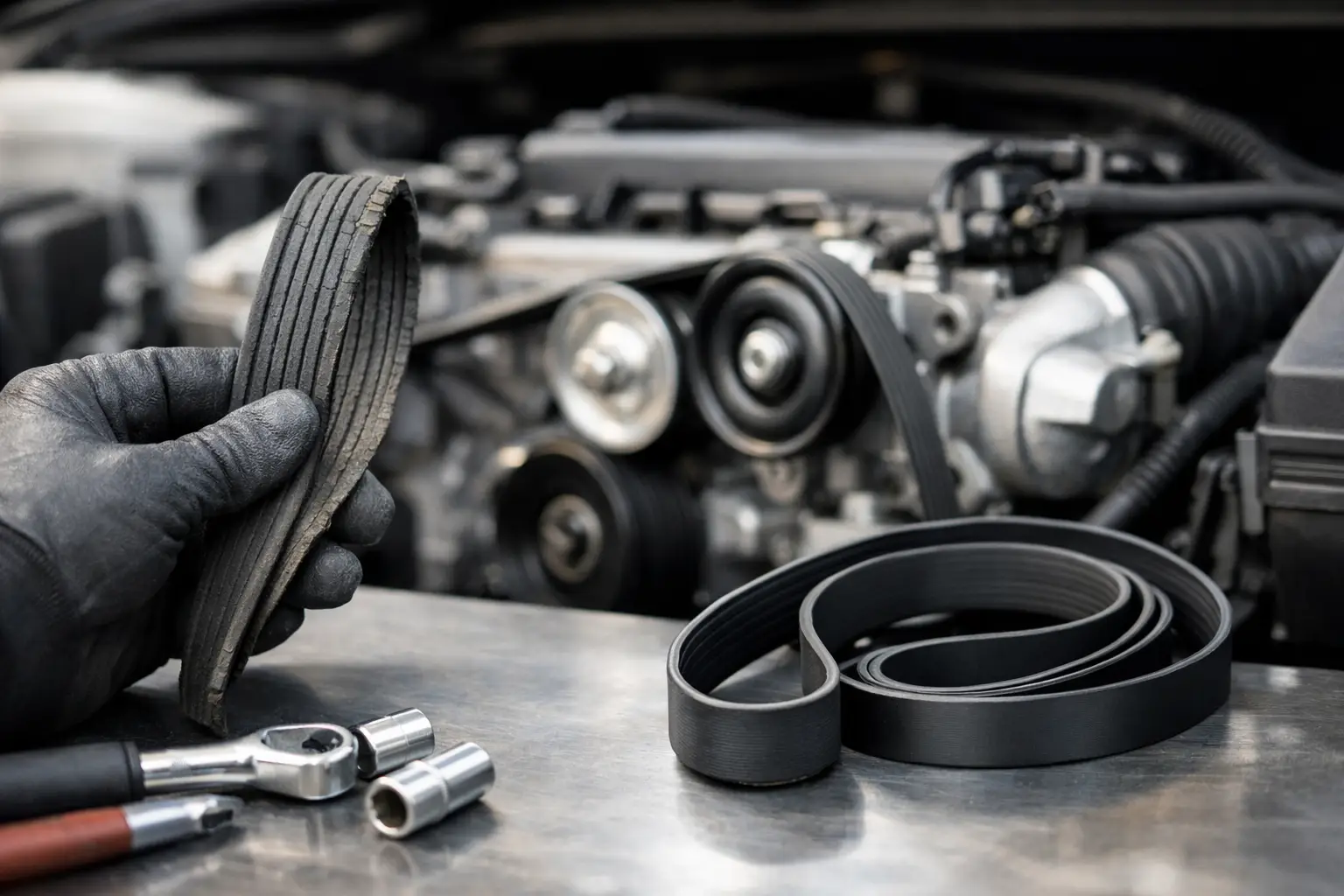
That quick squeal when you start the engine is easy to ignore until your battery light comes on, your steering gets heavy, or the AC quits in Houston traffic. Knowing when to replace serpentine belt issues before they turn into a breakdown can save you time, money, and a whole lot of stress.
The serpentine belt is a long rubber belt that drives several key systems under the hood. Depending on your vehicle, it may power the alternator, power steering pump, air conditioning compressor, and water pump. If that belt slips, cracks, or breaks, the effects can go from annoying to serious very quickly.
For most vehicles, a good rule of thumb is to inspect the belt regularly and expect replacement somewhere between 60,000 and 100,000 miles. That said, mileage is only part of the story. Age, driving conditions, belt material, and the condition of pulleys and tensioners all matter too.
When to replace serpentine belt based on mileage
Older vehicles often needed belt replacement closer to the 60,000-mile mark, while many newer belts are built from more durable materials and can last longer. If your owner’s manual gives a replacement interval, that is always the best starting point.
Still, real-world driving does not always follow the book. Stop-and-go traffic, long commutes, extreme heat, and frequent short trips can wear the belt faster than expected. In the North Houston area, high temperatures can dry out rubber components over time, which makes routine inspections especially important.
If your vehicle is approaching the recommended mileage and the belt has not been checked recently, it is smart to have it looked at during an oil change, brake inspection, or other routine service. Replacing a worn belt on schedule is usually far less expensive than dealing with the damage and inconvenience of a sudden failure.
Signs your serpentine belt may need replacement sooner
Mileage helps, but visible wear and drivability symptoms often tell you more. A serpentine belt can need replacement before it reaches the expected interval, especially if another part in the belt system is causing extra stress.
One common sign is squealing or chirping from the engine bay. Sometimes that noise happens only on startup. Other times it shows up when you turn the wheel, switch on the AC, or accelerate. Noise does not always mean the belt itself is bad, but it does mean the system needs attention.
You may also notice cracks, fraying, glazing, or missing ribs on the belt. A shiny or polished-looking belt can be a sign that it is slipping. If the belt edges are worn or uneven, that may point to pulley misalignment or a failing tensioner instead of simple age.
Performance issues can also show up. Dim headlights, a weak battery, overheating, or a loss of power steering assist may all trace back to a belt that is no longer doing its job. If the alternator or water pump is not being driven properly, the problem can escalate fast.
What happens if you wait too long
A worn serpentine belt does not always fail gradually. Sometimes it gives warning signs for weeks. Sometimes it snaps with very little notice.
If the belt breaks while you are driving, your alternator stops charging the battery. In many vehicles, you can also lose power steering assist, and if the water pump is belt-driven, the engine can overheat in a hurry. That can leave you stranded on the roadside or turn a routine maintenance item into a much bigger repair.
That is why timing matters. Replacing the belt a little early is usually a small maintenance decision. Replacing it too late can become a towing bill, a missed day of work, or engine damage in the worst-case scenario.
It is not always just the belt
A serpentine belt works as part of a system. The tensioner keeps the right amount of pressure on the belt, and the pulleys guide its path. If one of those components wears out, a brand-new belt may still squeal, slip, or wear prematurely.
That is where a proper inspection makes a difference. A technician should look at the belt itself, but also check pulley alignment, tensioner movement, and bearing noise from driven accessories. If a tensioner is weak or a pulley is wobbling, replacing only the belt may not solve the problem for long.
This is one reason some drivers replace the belt and related hardware together when mileage is high. It can be a more cost-effective move than replacing the belt now and coming back later for a tensioner that was already near the end of its life.
How age affects replacement timing
Even if you do not drive a lot, the belt can still age out. Rubber hardens over time, and heat speeds up that process. A low-mileage vehicle that spends years parked outside can still develop cracks and lose flexibility.
That matters for families with second cars, retirees who drive short distances, or anyone who works from home and puts fewer miles on the odometer. If your car is several years old and the original belt is still in place, age alone can justify an inspection.
A belt that looks decent at a quick glance may still be close to failure, especially if the wear is in the grooves or the rubber has become stiff. That is another reason a visual check by itself does not always tell the whole story.
When to replace serpentine belt on used cars
If you bought a used vehicle and do not have full service records, treat the serpentine belt as an unknown until it is inspected. It is one of those maintenance items that can be overlooked by previous owners, especially if the car seemed to run fine during a test drive.
Used cars can also come with a belt that was recently replaced, but with an old tensioner or worn pulley still in place. In that situation, the new belt may already be wearing unevenly. A quick inspection early in ownership can give you a better picture of where the car stands and help you avoid surprise repairs.
Can you inspect it yourself?
You can do a basic visual check if the belt is easy to see. Look for cracking across the ribs, frayed edges, glazing, chunks missing from the belt, or obvious looseness. If you hear squealing or notice any warning lights tied to charging or cooling, do not ignore them.
That said, many modern engine bays are tight, and belt wear is not always obvious from above. Some problems are caused by the tensioner or pulleys, which are harder to judge without experience. If you are not sure what you are looking at, a professional inspection is the safer move.
The best time to handle it
The easiest time to replace a serpentine belt is before it becomes urgent. If your vehicle is near the mileage interval, showing signs of wear, or making belt-related noise, it makes sense to take care of it during scheduled maintenance instead of waiting for a breakdown.
At Firestone1960, this is the kind of repair we like to catch early because it keeps our customers moving and avoids preventable problems. Most drivers are not looking for the cheapest temporary fix. They want honest advice, fair pricing, and confidence that the car will start, steer, and stay cool when they need it.
If you are wondering whether your belt can wait a little longer, the honest answer is sometimes yes and sometimes no. A newer belt with no visible wear may simply need monitoring. A noisy, cracked, or glazed belt on an older vehicle should not be pushed. The right call depends on the condition of the whole system, not just the mileage on the dash.
Your car rarely chooses a convenient time to break down. If the serpentine belt is showing its age, taking care of it now is one of the simplest ways to protect your routine, your budget, and your peace of mind.
Social Share:



No Comment Yet! You can post first response comment.