

07. 15. 2026
Best Tires for Houston Roads and Daily Driving
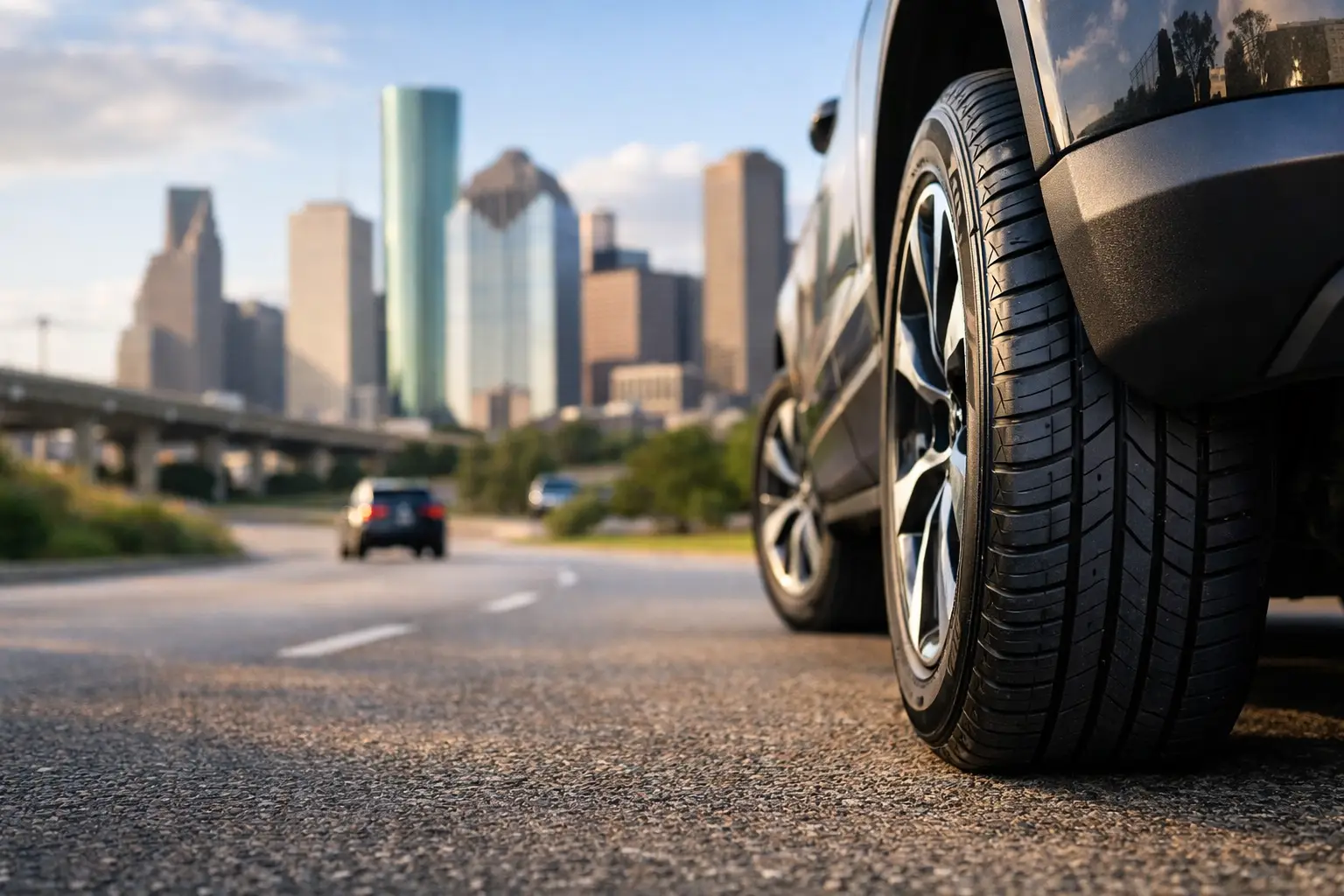
Houston drivers do not need a tire that only looks good in the parking lot. They need one that can handle hot pavement, sudden downpours, crowded commutes, rough construction zones, and the occasional pothole without making every drive feel uncertain. The best tires for Houston roads are usually the ones that match your vehicle, your driving habits, and the conditions you face every week.
For many North Houston drivers, a quality all-season touring tire is the most practical answer. But there is no single tire that is right for every sedan, SUV, truck, or performance vehicle. Choosing well means looking beyond price alone and paying attention to wet-road grip, tread life, ride comfort, and the correct size and load rating for your vehicle.
What Makes the Best Tires for Houston Roads?
Houston weather puts tires to work. Summer heat can speed up tread wear and affect air pressure. Heavy rain can turn familiar streets slick in minutes. Construction debris, uneven pavement, and potholes can also take a toll on tires, wheels, and alignment.
That is why wet traction deserves a high place on the priority list. A tire with effective tread channels helps move water away from the contact patch, giving your vehicle a better chance to maintain grip when the road is wet. No tire makes standing water safe, and drivers should never attempt to cross flooded streets. Still, a tire designed for strong wet performance can make a meaningful difference during normal rainy-day driving.
Heat resistance and treadwear matter, too. Houston commuters often put steady highway miles on their vehicles, while stop-and-go traffic adds more braking, acceleration, and heat cycles. A dependable tire should provide a comfortable ride while offering enough durability to deliver real value over its usable life.
All-Season Touring Tires: The Best Fit for Most Drivers
For daily driving in Houston, all-season touring tires are often the best overall choice. They are designed to provide balanced performance in dry conditions, rain, and mild temperature changes. They also tend to offer a quieter ride and longer tread life than more aggressive performance-focused tires.
This category works especially well for commuters, families, and drivers of sedans, minivans, crossovers, and many SUVs. If your priority is getting to work, school, appointments, and weekend errands safely and comfortably, a touring tire is usually a smart place to start.
The trade-off is that touring tires are not built to provide the sharpest cornering response for spirited driving. They are also not the best option for regular off-road use. For the majority of Houston-area vehicles, though, their blend of wet traction, comfort, and longevity makes them a practical investment.
Performance Tires for Sportier Cars
Performance tires can be a good fit for drivers who want more responsive steering, stronger dry-road grip, and confident handling through turns. They are common on sports sedans, coupes, muscle cars, and higher-performance SUVs.
Houston heat can help performance tires reach their intended operating range, but these tires often wear more quickly than touring models. Some may also produce more road noise and deliver a firmer ride. If your vehicle is a daily driver and you value a smooth, quiet commute, the extra grip may not justify the shorter tread life or higher replacement cost.
For performance-minded drivers, it is worth choosing a tire that still has strong wet-weather ratings. Fast handling is not much help when a summer thunderstorm arrives on the drive home.
Highway Tires for Trucks and SUVs
Truck and SUV owners who spend most of their time on pavement should consider highway-terrain tires. These tires are made for stable road manners, dependable tread life, and everyday comfort. They are often a better choice than aggressive all-terrain tires for drivers who rarely leave paved roads.
All-terrain tires make sense for drivers who regularly visit job sites, travel on gravel roads, tow in varied conditions, or head off pavement on weekends. They offer a tougher appearance and added traction on loose surfaces, but they can be noisier, heavier, and less fuel-efficient. Their more open tread patterns may also not provide the same quiet, refined highway feel as a dedicated highway tire.
The right choice depends on how you actually use your truck or SUV, not just how you want it to look.
Do Not Ignore Tire Size, Load Rating, and Speed Rating
Even the best tire model is the wrong choice if it does not meet your vehicle manufacturer’s requirements. Tire size, load index, and speed rating affect how your vehicle handles, carries weight, brakes, and responds on the road.
The numbers and letters on a tire sidewall can be confusing, but they matter. A larger tire is not automatically an upgrade, and changing sizes without considering wheel clearance, suspension geometry, and speedometer accuracy can create problems. For trucks and larger SUVs, the correct load rating is especially important when carrying passengers, equipment, or towing.
A knowledgeable tire professional can help confirm the proper fit and explain options that meet your budget without compromising safety. At Firestone1960, that means helping you understand the recommendation, not pressuring you into the most expensive tire in the shop.
Your Alignment Can Make or Break a New Set of Tires
A new set of tires should not be asked to fix an alignment problem. If your vehicle pulls to one side, your steering wheel sits off-center, or your old tires show uneven wear, schedule an alignment check before or during tire replacement.
Misalignment can wear down a new tire surprisingly fast, especially on the inside or outside edge where the damage is easy to miss. Potholes, curb contact, worn suspension components, and Houston’s uneven roads can all affect alignment over time.
Tire rotation is just as important. Front and rear tires wear differently, particularly on front-wheel-drive vehicles where the front tires handle much of the steering and braking work. Regular rotations help distribute that wear more evenly and can help you get the most life from your investment.
When Is It Time to Replace Your Tires?
Do not wait until a tire goes flat to think about replacement. Visible cracks, bulges, repeated air loss, vibration, and uneven wear are all reasons to have your tires inspected. Tread depth is another key factor, particularly before Houston’s rainy season. As tread wears down, the tire has less ability to clear water and maintain traction.
Age matters as well. Tires can deteriorate over time even when they do not have many miles on them. This is common on vehicles that sit for long periods, seasonal vehicles, and spare tires. A professional inspection can identify aging concerns that are not obvious from a quick look in the driveway.
Should You Replace Two Tires or Four?
Replacing all four tires generally provides the most consistent handling and traction. If only two tires need replacement, the best approach depends on the vehicle, the condition of the remaining tires, and whether the vehicle has all-wheel drive. All-wheel-drive systems can be especially sensitive to differences in tire circumference.
When two tires are replaced, the new pair is commonly installed on the rear axle to support better stability in wet conditions. Your technician should review your vehicle’s needs and the remaining tread depth before making that call.
Buy for the Road You Drive Most Often
The right tire is not always the cheapest one, and it is not always the highest-priced one. A value-minded choice is a tire that fits your vehicle correctly, performs well in Houston rain and heat, and lasts according to the way you drive.
Before your next tire purchase, think about your normal route, the miles you drive each month, how often you carry passengers or cargo, and whether ride comfort or handling matters more to you. Then have the tires, alignment, and tire pressure checked together. A clear recommendation and proper installation can help your vehicle ride smoother, stop more confidently, and stay ready for the roads ahead.
Social Share:





No Comment Yet! You can post first response comment.