

09. 1. 2026
How to Diagnose Engine Overheating Safely

A temperature gauge climbing toward the red on the Sam Houston Parkway is not a warning to ignore until you reach home. Knowing how to diagnose engine overheating starts with protecting yourself, then looking for the clues your cooling system is giving you. In Houston traffic and summer heat, a small cooling-system problem can turn into major engine damage faster than many drivers expect.
If the temperature warning light comes on, steam rises from under the hood, or your gauge suddenly reads hot, pull over safely as soon as possible. Turn off the air conditioner, turn on the heater if you need a little time to reach a safe shoulder, and stop the vehicle. Do not remove the radiator cap or coolant reservoir cap while the engine is hot. Pressurized coolant can cause serious burns.
Start With the Severity of the Overheating
Not every high temperature reading means the same thing. A gauge that rises slightly during a long uphill drive or while towing may return to normal once the load decreases. A gauge that reaches the red zone, triggers a warning light, produces steam, or stays high at idle needs immediate attention.
After parking, turn the engine off if the temperature continues rising or you see steam. Let it cool completely before inspecting anything under the hood. This can take 30 minutes or longer, depending on the vehicle and outside temperature. Adding cold water to an overheated engine is not a safe shortcut and may damage hot components.
Once the engine is cool, look underneath the vehicle. A puddle of green, orange, pink, yellow, or blue fluid can point to a coolant leak. Coolant may also leave a sweet smell or dried, crusty residue around hoses, the radiator, water pump, or coolant reservoir.
How to Diagnose Engine Overheating Step by Step
A basic visual inspection can help narrow down the problem, but it cannot always identify the failed part. Modern cooling systems are interconnected, and the original cause may be a leaking hose, stuck thermostat, weak radiator fan, failing water pump, blocked radiator, or a more serious internal engine issue.
Check the Coolant Level When the Engine Is Cold
Find the coolant overflow reservoir and check whether the level sits between the minimum and maximum marks. If it is low or empty, the system may have a leak. Low coolant leaves the engine without enough fluid to carry heat away, especially during stop-and-go driving.
Use the coolant type specified for your vehicle if topping it off is necessary. Mixing incompatible coolants can reduce corrosion protection and create problems later. Also remember that adding coolant addresses the symptom, not the reason it became low. A sealed cooling system should not regularly need refilling.
Look at Hoses, the Radiator, and the Reservoir
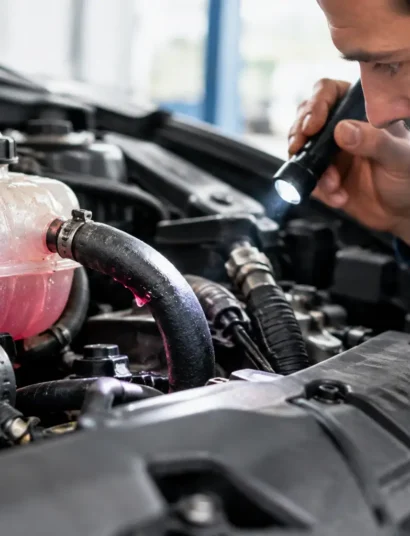
With the engine cool, inspect accessible radiator hoses for cracks, swelling, soft spots, or loose clamps. Check around the radiator for bent fins, damage, or visible leakage. Road debris, bugs, and dirt can restrict airflow through the radiator, which is especially noticeable during hot North Houston summers.
Look closely at the coolant reservoir and radiator cap area. A worn cap may not hold the pressure the system needs, lowering the coolant’s boiling point. It is a relatively inexpensive part, but it should be tested or replaced based on the vehicle’s specifications rather than guessed at.
Pay Attention to When It Overheats
The driving condition matters. If your vehicle overheats mostly while sitting in traffic but cools down at highway speed, a radiator fan, fan relay, fan control module, or wiring issue may be the problem. At highway speed, air naturally moves through the radiator. At idle, the electric fan must do that work.
If overheating happens at all speeds, low coolant, poor circulation, a thermostat that is not opening, a water pump problem, or a restricted radiator becomes more likely. If the heater blows cold while the gauge reads hot, coolant may be low or air may be trapped in the system. These clues help a technician diagnose the issue efficiently, but they are not a reason to keep driving an overheating vehicle.
Watch for Signs of a Water Pump or Thermostat Problem
The water pump circulates coolant through the engine and radiator. A failing pump may leak near its housing, make a whining or grinding noise, or fail to move coolant effectively. On some vehicles, the pump is driven by the timing belt or timing chain, so repair timing and cost can vary significantly by engine design.
A thermostat controls coolant flow based on engine temperature. If it sticks closed, hot coolant cannot reach the radiator to be cooled. If it sticks open, the engine may run too cool or take a long time to warm up. Because thermostat symptoms overlap with other cooling-system faults, a proper diagnosis is better than replacing parts one at a time.
Consider the Possibility of an Internal Engine Issue
Persistent overheating can damage a head gasket, warp a cylinder head, or create other internal problems. Warning signs include thick white exhaust smoke after the engine is warm, a sweet smell from the exhaust, milky residue on the oil dipstick or oil cap, unexplained coolant loss, rough running, or bubbles continuously appearing in the coolant reservoir.
These symptoms do not always confirm a blown head gasket, but they call for professional testing. A technician may use a pressure test, combustion-gas test, scan tool data, and cooling-fan checks to find the source without relying on assumptions.
What Not to Do When Your Engine Runs Hot
The quickest way to make an overheating problem worse is to keep driving and hope it settles down. Running an engine in the red can turn a hose repair into a major engine repair. Avoid opening the radiator cap while hot, pouring coolant directly onto a hot engine, or relying on repeated top-offs as a long-term fix.
You should also avoid using stop-leak products unless a qualified technician specifically recommends one for your situation. Some products can clog narrow passages in the radiator, heater core, or cooling system. They may offer a temporary fix in an emergency, but they can create a larger repair later.
When to Schedule a Cooling-System Inspection
Schedule an inspection promptly if the temperature warning light has appeared, coolant is disappearing, the vehicle has overheated more than once, or you notice steam, leaks, or a sweet odor. It is also wise to have the cooling system checked before a long summer road trip, particularly if your vehicle is older or has high mileage.
At Firestone1960, technicians can inspect the cooling system, test for leaks, check fan operation, evaluate coolant condition, and explain what is causing the problem in clear terms. The right repair depends on the diagnosis. Sometimes it is a hose or cap; other times, the vehicle needs a thermostat, radiator, water pump, or more detailed engine testing.
Your engine should stay near its normal operating temperature, whether you are commuting across Houston or waiting in school pickup traffic. If the gauge starts creeping up, treat it as your vehicle asking for help early – before heat turns a manageable repair into a costly one.
Social Share:


No Comment Yet! You can post first response comment.