

06. 29. 2026
Wheel Alignment Guide for Drivers
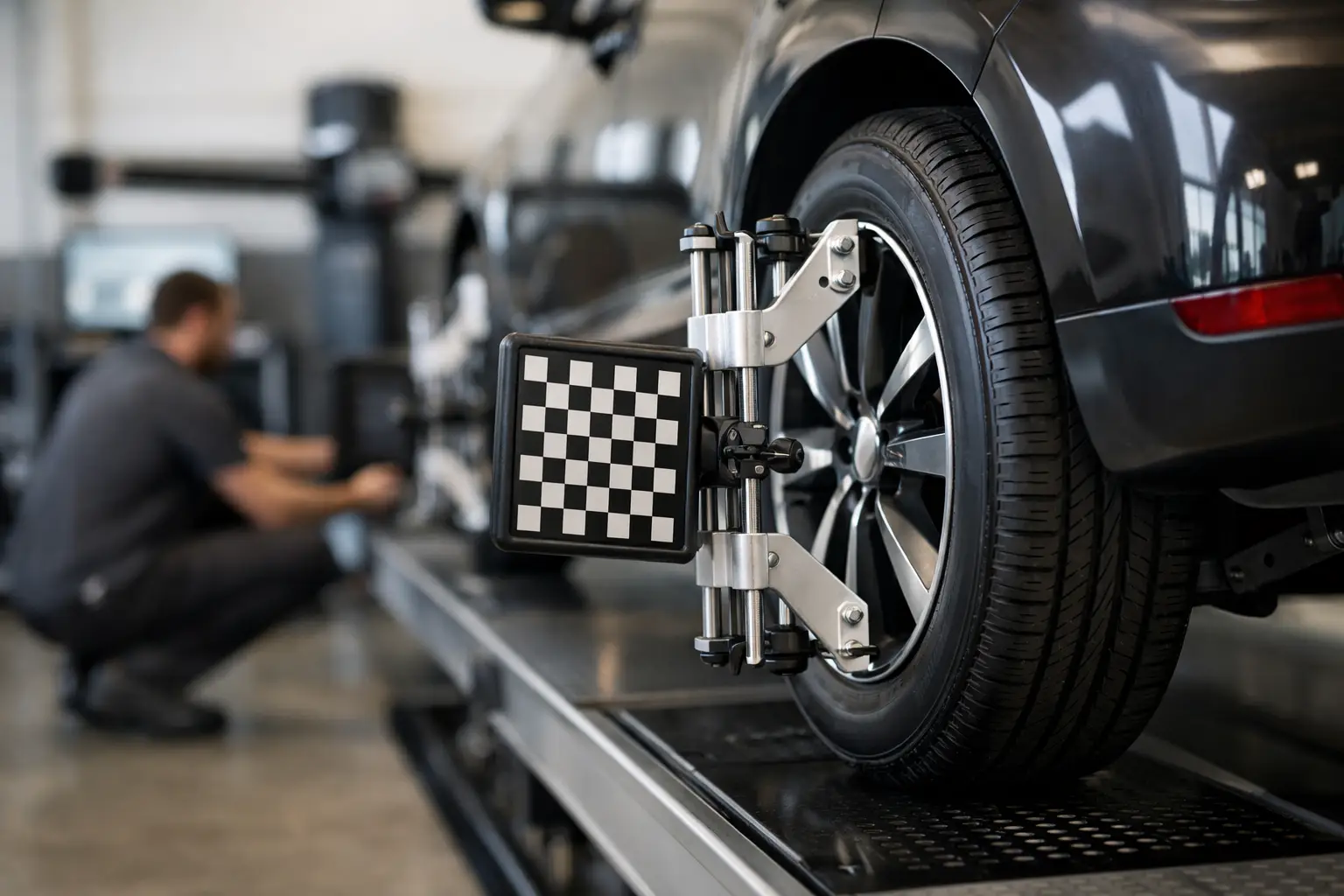
That slight pull to the right on FM 1960 may not feel like a big deal at first. But when your steering wheel sits crooked, your tires wear unevenly, and your car stops feeling planted on the road, alignment starts affecting more than comfort. This wheel alignment guide for drivers is here to make the issue simple, so you know what the signs mean, when to act, and why a small correction now can save you money later.
What wheel alignment really means
Wheel alignment is the adjustment of your vehicle’s suspension angles so the tires meet the road the way the manufacturer intended. It does not mean moving the tires themselves into a different position. Instead, technicians adjust key angles that affect how straight your car tracks, how the steering responds, and how evenly the tires wear.
The three alignment angles you will hear about most are camber, caster, and toe. Camber refers to whether the tire leans inward or outward when viewed from the front. Caster affects steering stability and return-to-center feel. Toe describes whether the tires point slightly inward or outward when viewed from above. Even small changes in these angles can change how your vehicle behaves on the road.
For most drivers, the practical takeaway is simple. If your alignment is off, your tires can scrub against the pavement instead of rolling cleanly. That means faster tire wear, reduced fuel efficiency, and a vehicle that feels less stable than it should.
Why alignment matters more than many drivers think
A bad alignment usually starts as a nuisance and turns into an expense. You may notice the steering wheel is no longer centered or that the car drifts when you relax your grip. Keep driving that way, and the tires often develop uneven wear patterns that shorten their life well before the tread should be gone.
Alignment also affects safety. A vehicle that wanders or pulls can be harder to control in heavy traffic, during sudden braking, or in wet conditions. It may not cause an immediate emergency, but it can add stress and reduce confidence behind the wheel.
In a place like North Houston, where drivers deal with long commutes, rough patches of road, potholes, and plenty of stop-and-go traffic, alignment issues show up more often than people expect. One hard hit on a curb or pothole can be enough to knock things out of spec.
Wheel alignment guide for drivers: the warning signs
Some alignment problems are obvious, and some are easy to miss until tire wear becomes expensive. If your car pulls to one side on a flat road, that is one of the clearest signs. A crooked steering wheel while driving straight is another common clue.
Uneven tire wear is often the biggest red flag. If the inside or outside edge of a tire is wearing faster than the rest, alignment should be checked soon. Feathering across the tread can also point to a toe problem.
You may also feel the steering has changed. The vehicle might feel loose, less responsive, or less settled at highway speeds. Sometimes drivers describe it as the car not driving straight unless they keep correcting it.
There is one important trade-off to understand here. Not every pull or vibration is caused by alignment alone. Tire pressure, tire condition, brake drag, worn suspension parts, and even road crown can create similar symptoms. That is why a proper inspection matters instead of guessing.
What causes wheels to go out of alignment
Normal driving can slowly shift alignment over time, but sudden impacts are the more common cause. Hitting potholes, bumping curbs during parking, driving over road debris, and minor fender impacts can all change suspension angles.
Worn parts can also be part of the problem. If tie rods, ball joints, control arm bushings, or other steering and suspension components have excessive play, alignment may not hold even after an adjustment. In that case, replacing the worn part comes first.
Vehicle modifications can change alignment needs too. Lift kits, lowering springs, aftermarket wheels, and suspension upgrades can all affect geometry. That does not automatically mean a problem, but it does mean the alignment should be set with those changes in mind.
How often should you get an alignment?
There is no single mileage rule that fits every driver, but a good habit is to have alignment checked about once a year or whenever you install new tires. It is also smart after hitting a major pothole, curb, or road hazard, even if the car still seems mostly fine.
If you commute daily, drive on rough roads, or carry heavy loads often, your vehicle may need more frequent checks. Some drivers go years without noticing a problem, while others see symptoms within months. It depends on road conditions, driving habits, suspension wear, and the vehicle itself.
A practical rule is this: if the steering feels different, the car starts pulling, or your tire wear looks uneven, do not wait for the next scheduled service. Alignment issues rarely fix themselves.
What happens during a wheel alignment service
A professional alignment starts with an inspection. The technician checks tire condition and inflation, then looks over steering and suspension parts to make sure the vehicle can actually be aligned correctly. If something is loose or worn, that needs to be addressed first.
Next, the vehicle is placed on alignment equipment that measures the current angles against factory specifications. The technician then makes adjustments to bring camber, caster, and toe back into range where applicable for that vehicle.
Once the adjustments are complete, the final readings are verified. A good shop will explain what was out of spec, what was adjusted, and whether any parts are beginning to wear. That kind of transparency matters because it helps you understand whether the alignment was a simple correction or part of a larger suspension issue.
Two-wheel vs. four-wheel alignment
This is where things can get a little confusing. Some vehicles only allow adjustments at the front, while many modern vehicles require a four-wheel alignment to make sure all wheels are properly aligned with one another.
A front-end alignment may sound cheaper, but it is not always the right solution. If the rear alignment is off, the vehicle can still track poorly and wear tires unevenly. The right service depends on your vehicle design and what the measurements show.
That is why it helps to think beyond the price of the alignment itself. A less expensive service that does not correct the actual issue can cost more in tire wear and handling problems later.
Can you drive with bad alignment?
Usually, yes, at least for a while. But that does not mean you should ignore it. Mild misalignment may only cause gradual tire wear at first. More severe cases can make the vehicle harder to handle and can chew through a tire much faster than most people expect.
If the pull is strong, the steering wheel is noticeably off-center, or you just hit something hard enough to shake the car, it is worth having the vehicle checked soon. If there is also vibration, clunking, or obvious looseness in the steering, the issue may involve suspension or tire damage as well.
How drivers can protect their alignment and tires
You cannot avoid every pothole in Houston traffic, but a few habits can help. Keep your tires inflated to the correct pressure, rotate them on schedule, and avoid hitting curbs when parking. Slow down on rough roads when possible, and if you hit a deep pothole hard, pay attention to how the vehicle feels afterward.
It also helps to look at your tires once in a while. You do not need to be a technician to spot obvious edge wear or a steering wheel that suddenly sits crooked. Catching the issue early usually means a simpler fix and better tire life.
If you recently bought new tires, alignment is especially worth staying on top of. New tires are a big investment, and misalignment can shorten their life long before you get your money’s worth.
When it makes sense to schedule service
The best time to schedule an alignment is not after the tire damage becomes visible from across the driveway. It is when the first signs show up or when your vehicle is already in for tire service, suspension work, or routine maintenance.
For local drivers who depend on their cars every day, a proper alignment is one of those services that pays off quietly. Better handling, straighter tracking, and longer tire life are not flashy benefits, but they matter every time you get on the road. At Firestone1960, that is exactly the kind of maintenance we believe should be straightforward, honest, and worth doing before a small problem becomes an expensive one.
If your car does not feel quite right lately, trust that instinct. A quick alignment check can bring back the smooth, confident drive your vehicle is supposed to have.
Social Share:



No Comment Yet! You can post first response comment.