
05. 26. 2026
Dealer Service vs Local Mechanic: Which Wins?
If you have ever stared at a dealership estimate and wondered whether your neighborhood shop could handle the same repair for less, you are not alone. The dealer service vs local mechanic question comes up all the time for drivers who want to protect their vehicle without overpaying or guessing wrong.
The honest answer is that neither option is automatically better in every case. It depends on the age of your vehicle, the kind of repair you need, your warranty status, and how much you value price, speed, and convenience. For most everyday drivers around Houston, the smart choice is not about picking a side forever. It is about knowing when each one makes sense.
Dealer service vs local mechanic: what is the real difference?
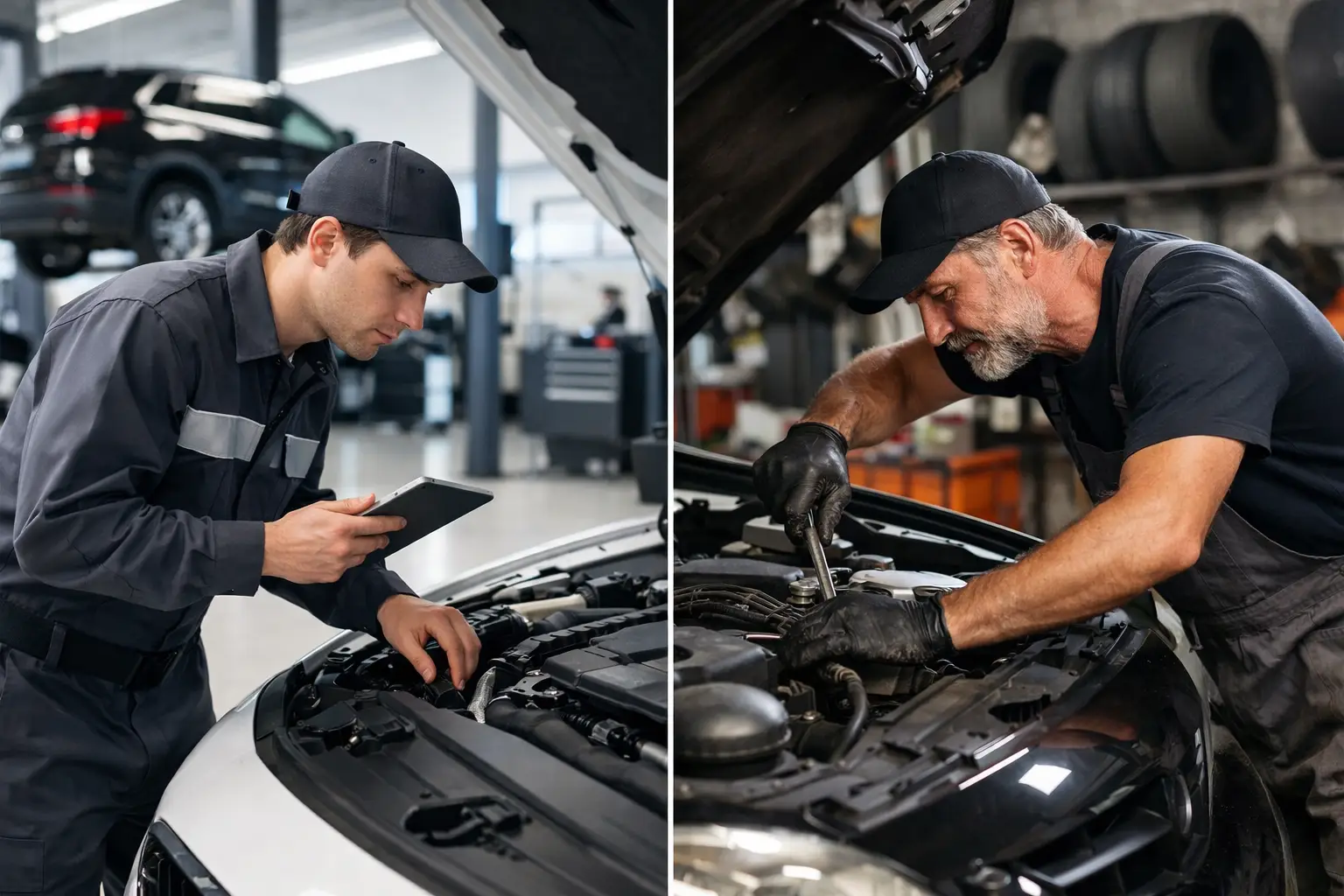
A dealership service department works within a manufacturer network. That usually means factory-trained technicians, brand-specific procedures, and direct access to OEM parts and technical service information for that make.
A local mechanic, especially a full-service shop with experienced technicians and modern diagnostic equipment, offers a broader repair approach. Independent shops work on many makes and models, often provide more flexible scheduling, and usually compete harder on price and customer service because they earn business one visit at a time.
That difference matters, but not always in the way people think. A dealership may know your brand inside and out, but a strong local shop may see the same common issues every week and solve them just as effectively, often with more personal communication.
When dealer service makes more sense
There are situations where the dealership is the safer or simpler option. If your vehicle is still under a factory warranty, dealership service can remove a lot of uncertainty. Warranty repairs, recalls, and software updates often fit naturally into the dealer environment because they are already tied into the manufacturer system.
Dealers can also be a good choice for very new vehicles with highly specialized electronics, advanced driver assistance systems, or model-specific issues that require factory tools and procedures. If a repair involves proprietary programming or a recently released technical bulletin, the dealership may have a direct advantage.
There is also a paperwork factor. Some owners prefer keeping all maintenance records at the dealer, especially if they plan to sell or trade the vehicle later. That does not mean local service records are less valid, but some buyers like seeing a dealer-only history.
Even so, dealer service comes with trade-offs. Labor rates are often higher. Parts pricing may be higher. Scheduling can be less flexible, and the experience can feel more transactional than personal. For basic maintenance, that extra cost does not always buy extra value.
When a local mechanic is the better fit
For routine maintenance and many common repairs, a local shop is often the better choice for working adults, families, and commuters who need reliable service without dealership pricing. Oil changes, brake work, alignments, tire services, battery replacement, suspension repairs, engine diagnostics, and many electrical repairs are well within the scope of a qualified independent shop.
Local mechanics also tend to be stronger on everyday convenience. You are more likely to get faster turnaround, clearer explanations, and a conversation with someone who is focused on what your car actually needs rather than what a service menu suggests.
That matters when you are balancing a budget. A good local shop will usually explain what is urgent, what can wait, and what will give you the most value right now. That kind of honesty is a big reason people stay with the same shop for years.
In a community-focused business model, trust is part of the service. Shops like Firestone1960 build relationships by helping drivers make practical decisions, not by pushing every possible recommendation at once.
Cost is not the only factor, but it matters
For most drivers, price starts the conversation. Dealership labor rates are commonly higher than independent shop rates, and that difference adds up quickly on repairs that take several hours. Parts costs can vary too, depending on whether the job uses OEM parts, aftermarket parts, or a mix based on the vehicle and repair.
Still, the cheapest estimate is not always the best value. If a low-cost repair does not address the root problem, you can end up paying twice. What you want is a shop that diagnoses accurately, explains the options clearly, and stands behind the work.
That is where local shops often shine. You may have more flexibility in repair options, including whether an OEM or high-quality aftermarket part makes the most sense. On an older vehicle, that flexibility can save a lot of money without sacrificing reliability.
Does going to a local mechanic void your warranty?
This is one of the biggest misconceptions in car care. In most cases, no, you do not have to use the dealership for routine maintenance just to keep your factory warranty intact. What matters is that maintenance is done correctly and that records are kept.
If you get oil changes, brake inspections, tire rotations, or other routine services at a reputable local shop, that generally does not void your warranty. The key is using the correct parts and fluids where required and following the manufacturer maintenance schedule.
Where things get more specific is warranty repair itself. If a failed component is covered by the manufacturer, the dealership is often the natural place to handle it. The issue is not that your local mechanic cannot do the work. It is that the manufacturer typically controls how covered repairs are processed and paid.
What about parts quality?
Some drivers hear “local mechanic” and assume generic parts. That is outdated thinking. A quality independent shop can source OEM parts, OEM-equivalent parts, or premium aftermarket parts depending on the repair and your goals.
Sometimes OEM is the right move, especially for sensitive sensors, engine components, or brand-specific systems. Other times, a trusted aftermarket part performs just as well and gives you better value. A good shop will tell you the difference instead of making the choice for you in the background.
The better question is not whether a part came from a dealership counter. It is whether the part is right for your vehicle, your budget, and the type of repair being performed.
Communication can make or break the experience
One of the biggest differences in the dealer service vs local mechanic decision is not technical at all. It is communication.
At a dealership, you may speak with a service advisor who manages a high volume of appointments and follows a set process. That can work fine, but it can also leave customers feeling rushed or unsure about what is truly necessary.
At a strong local shop, the experience is often more direct. You can ask questions, get plain-English answers, and talk through priorities if you are not ready to do every recommended service in one visit. For drivers who do not want pressure, that matters.
Clear communication also supports better long-term maintenance. When you understand what is happening with your brakes, tires, alignment, battery, or check engine light, you make better decisions and usually avoid bigger repairs later.
Choosing the right shop for your situation
If your car is brand new, under warranty, or needs recall work, the dealership may be the right first stop. If your vehicle needs a software update tied to the manufacturer or a repair that is highly brand-specific, dealer service can be worth the premium.
If your car is out of warranty and you need maintenance, diagnostics, tire work, brakes, suspension service, or general repairs, a trusted local mechanic is often the more practical choice. You will usually get more personal service, more pricing flexibility, and a better shot at building a long-term relationship with the people caring for your vehicle.
The best way to choose is to look beyond labels. Ask whether the shop explains repairs clearly, uses quality parts, employs qualified technicians, and treats you like a customer they want to keep. That tells you more than the sign out front.
Your vehicle does not care whether the building says dealership or neighborhood shop. It cares whether the work is done right, on time, and with honest advice. When you find a team that gives you that, hang onto them – good car care is easier when trust comes standard.
Social Share:


No Comment Yet! You can post first response comment.