

07. 5. 2026
Why Your Car Overheats at Idle
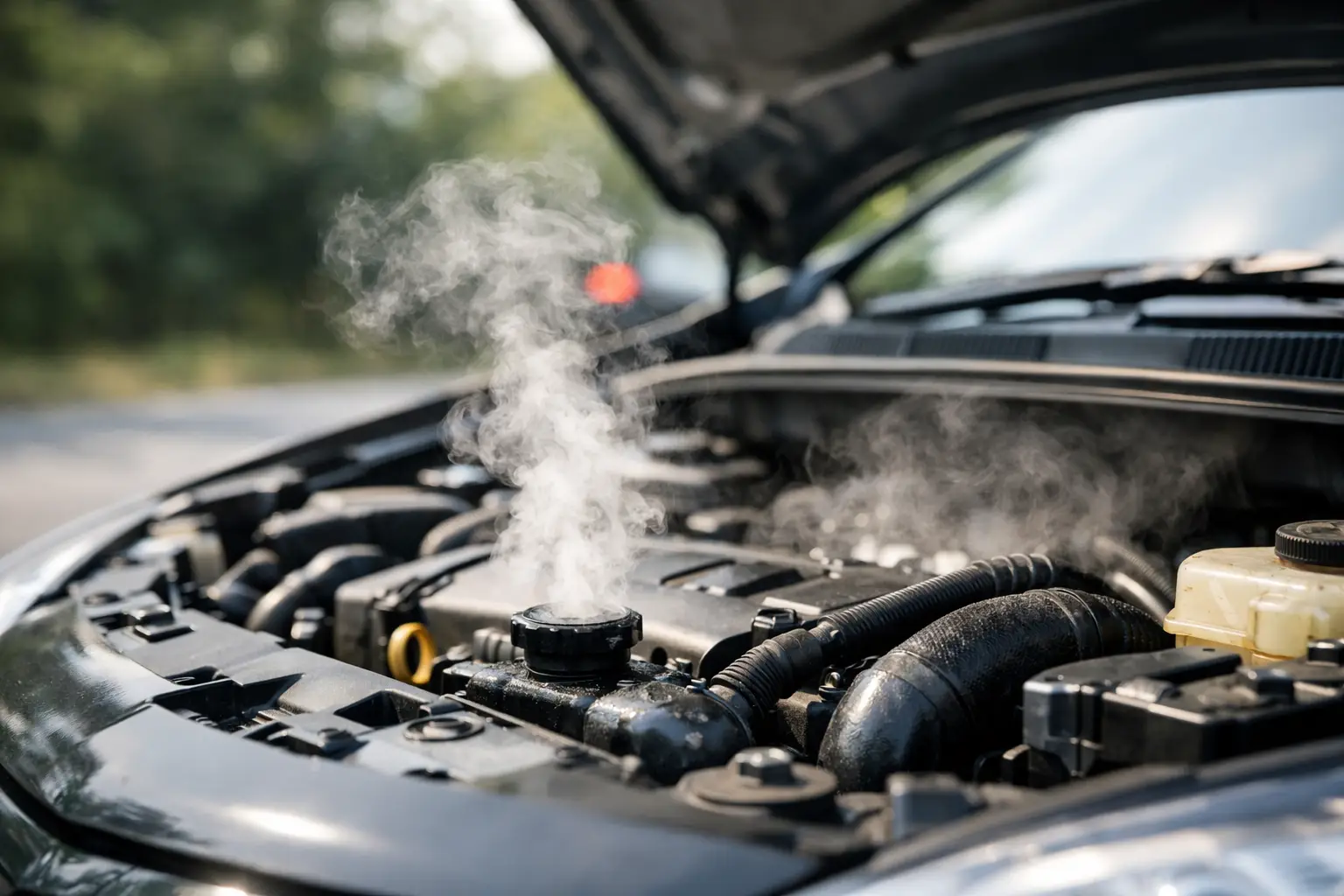
You’re sitting at a red light with the AC on, and suddenly the temperature gauge starts climbing. Then you get moving again, and it drops back toward normal. When a car overheats at idle, that pattern usually points to a cooling system problem that shows up most when airflow is low and the engine is still producing heat.
That can feel confusing because the vehicle may seem fine on the highway. But overheating at a stop is not something to brush off. Even if it only happens once in traffic, excess heat can lead to warped engine parts, blown head gaskets, and expensive repairs if the cause is ignored.
Why a car overheats at idle but not while driving
When you’re moving down the road, air naturally passes through the radiator and helps pull heat away from the coolant. At idle, your engine loses that natural airflow and depends much more on the radiator fan, coolant circulation, and the rest of the cooling system doing their jobs.
That is why this symptom has a different feel than a vehicle that overheats all the time. If the temperature rises mostly while stopped, the issue is often related to poor airflow through the radiator, weak fan operation, or reduced cooling system efficiency. It can still be a serious problem, but it gives your technician a useful clue.
In Houston-area traffic, this shows up even more often. Long lights, slow commutes, hot weather, and heavy AC use put extra demand on the cooling system, especially in older vehicles or cars that are behind on maintenance.
The most common reasons a car overheats at idle
Cooling fan problems
A bad radiator fan is one of the first things to suspect when a car overheats at idle. The fan is there to move air across the radiator when the vehicle is not moving fast enough to do it naturally. If that fan motor fails, turns weakly, or comes on too late, heat builds quickly at stoplights and in traffic.
Sometimes the fan itself is not the root issue. The problem may be a blown fuse, faulty relay, damaged wiring, or a bad temperature sensor that is not telling the fan to switch on. In some cases, the fan may run with the AC on but not cycle correctly based on engine temperature, which points to a control issue rather than the fan blades or motor alone.
Low coolant level
Coolant carries heat away from the engine. If the level is low, the system cannot manage temperature the way it should. A small leak may go unnoticed for a while, especially if it only leaves light residue or evaporates on hot engine parts.
Low coolant can cause inconsistent symptoms. You may notice the gauge rise at idle, heater performance change, or occasional temperature spikes. Topping it off without finding the leak is only a short-term move. Coolant does not get used up under normal conditions, so if it is low, there is usually a reason.
Thermostat issues
The thermostat controls coolant flow between the engine and radiator. If it sticks closed or does not open fully, the coolant cannot circulate properly. That can cause overheating at idle, during low-speed driving, or eventually at any speed.
Thermostat failures are tricky because they do not always fail in a dramatic way. Sometimes they cause gradual temperature swings rather than immediate overheating. The engine may run normal one day and hot the next, especially in warm weather.
Radiator blockage or poor flow
A radiator can only remove heat if coolant is flowing through it and air can pass across it. Internal buildup, corrosion, and debris can reduce how well the radiator works. Externally, dirt, leaves, and road grime can restrict airflow through the fins.
This kind of restriction often shows up more at idle because the cooling system has less room for error when the car is not moving. At highway speeds, natural airflow may partly mask the issue for a while.
Water pump problems
The water pump keeps coolant circulating through the engine and radiator. If the pump is worn, leaking, or has a damaged impeller, coolant flow may be too weak to control temperature properly.
Water pump issues do not always start with major overheating. You might first notice coolant loss, a whining noise, or temperature changes that seem to come and go. If circulation drops enough, idle overheating becomes much more likely.
Air trapped in the cooling system
After coolant service or a repair, air can get trapped in the system if it was not bled correctly. Air pockets interfere with coolant flow and can create hot spots in the engine. This can lead to a gauge that rises unpredictably, poor heater performance, or overheating at idle.
This is one of those problems that can look bigger than it is, but it still needs to be corrected properly. Guessing your way through it can make the problem worse.
Signs the issue is getting more serious
If your car overheats at idle once, you should pay attention. If it happens repeatedly, the risk goes up fast. Warning signs include steam from under the hood, a sweet smell from leaking coolant, puddles under the vehicle, the heater blowing cool air when the engine is hot, or the temperature gauge moving higher than normal more often.
A check engine light can also be part of the picture. Modern vehicles monitor coolant temperature and fan performance, so the system may store fault codes even before the problem becomes constant.
If the engine starts running rough, losing power, or producing white exhaust smoke, stop driving it and have it inspected. At that point, overheating may be affecting engine components rather than just the cooling system.
What to do if your car overheats at idle
Start by turning off the AC and turning the heater on if you are stuck in traffic and the temperature is climbing. It is not comfortable in Texas heat, but it can help pull some heat away from the engine long enough to get you somewhere safe.
If the gauge keeps rising, pull over and shut the engine off as soon as you can do it safely. Do not keep driving and hope it clears up. A few extra minutes of overheating can turn a manageable repair into a major engine job.
Do not remove the radiator cap while the engine is hot. Pressurized coolant can cause serious burns. Let the system cool fully before anyone checks the level.
If the problem keeps returning, schedule a proper diagnosis rather than replacing parts at random. Cooling system issues can overlap, and the obvious symptom is not always the actual cause.
How a shop diagnoses idle overheating
A good diagnosis starts with the basics, not guesswork. A technician will typically inspect coolant level and condition, pressure test the system for leaks, verify fan operation, check thermostat behavior, and confirm that coolant is circulating as it should.
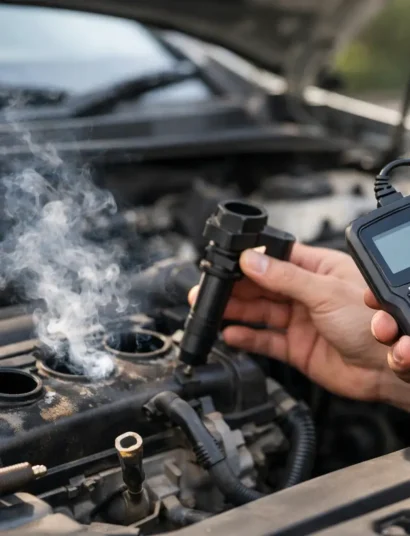
Depending on the vehicle, they may also scan for temperature-related fault codes, inspect wiring to the fan circuit, test relays and sensors, and look for signs of radiator restriction or water pump failure. If there is evidence of repeated overheating, they may also check for internal engine damage.
This matters because parts-swapping gets expensive fast. Replacing a thermostat will not fix a failed fan motor, and replacing a fan will not solve a clogged radiator. Getting the root cause right the first time saves time, money, and frustration.
Can you keep driving with this problem?
Usually, no. If a car overheats at idle, it may seem drivable because the temperature comes back down once you start moving. That does not mean the problem is minor. It means the cooling system is barely keeping up under ideal airflow conditions and struggling the moment traffic slows down.
That is a risky situation for commuters, parents in school pickup lines, and anyone who gets stuck on I-45 or Beltway traffic. If the fan stops working completely or coolant drops further, the vehicle may begin overheating at all speeds.
A short trip to a repair shop may be reasonable if the temperature stays stable and the vehicle is close by, but repeated driving with an overheating issue is gambling with the engine.
Preventing overheating before it starts
Cooling systems do not last forever without attention. Coolant breaks down over time, hoses age, clamps loosen, thermostats wear out, and fans can weaken long before they fail completely. Routine inspections help catch those problems before they leave you stranded.
It also helps to take the temperature gauge seriously. Many drivers ignore small changes because the car still runs. But a gauge that suddenly sits higher than usual, especially in traffic, is often the first warning.
For local drivers who rely on their vehicles every day, regular maintenance and quick diagnostics are worth it. A trusted shop like Firestone1960 can usually spot whether the issue is something straightforward, like a fan relay or low coolant, or something that needs deeper repair before real engine damage sets in.
When your engine runs hot at a stop, it is your car asking for attention before a small cooling issue becomes a much bigger one.
Social Share:


No Comment Yet! You can post first response comment.