

07. 13. 2026
Tire Patch vs Plug Safety: What Drivers Should Know
A nail in the tread can turn an ordinary commute into a stressful roadside stop. When you need a flat fixed, tire patch vs plug safety is more than a question of cost or convenience – it affects how confidently your vehicle handles Houston heat, heavy rain, and daily highway traffic.
A tire plug can get you moving quickly, but the fastest fix is not always the safest long-term repair. The right choice depends on where the tire was punctured, how large the hole is, how long the tire was driven low, and the tire’s overall condition. A qualified tire inspection gives you clear answers before a small puncture becomes a bigger safety problem.
Tire Patch vs Plug Safety: The Key Difference
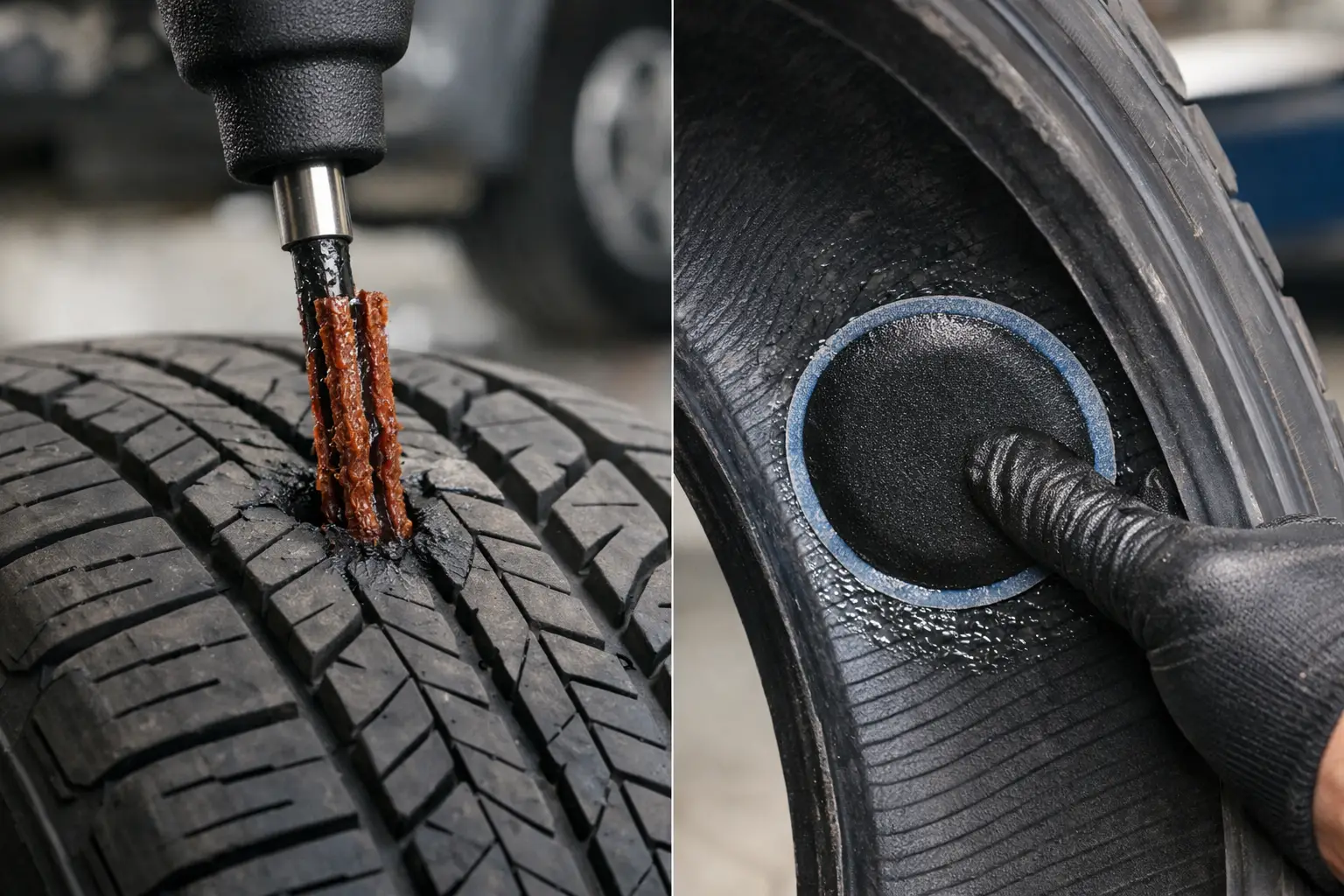
A tire plug is inserted from the outside of the tire to fill a puncture channel. This is commonly done through the tread without removing the tire from the wheel. Because it is quick and requires less labor, a plug can be useful as a short-term measure when you need to get off the road safely and reach a repair shop.
A patch is applied from inside the tire after the technician removes it from the wheel and inspects the interior. The most dependable professional repair typically uses a combination patch and plug unit. The plug portion fills the puncture path, while the patch seals the inner liner where pressurized air could otherwise escape.
That interior inspection is the real safety advantage. A technician can see whether the tire has hidden damage from being driven underinflated, whether moisture has entered the tire, and whether the puncture is actually in a repairable area. An outside-only plug cannot reveal those conditions.
For a repair intended to last, a patch-plug combination is generally the preferred approach for a qualifying tread puncture. It takes more time than inserting a plug, but it provides a more complete seal and allows the tire to be evaluated before it goes back into service.
When a Tire Can Be Safely Repaired
Not every flat tire is repairable. A tire may be a good candidate for repair when the puncture is small, located in the center portion of the tread, and the tire has not been driven while severely low on air. In most cases, punctures up to 1/4 inch in the repairable tread area may be considered, provided the tire is otherwise in good condition.
Tread depth matters too. A tire that is near the end of its usable life may not be worth repairing, even if the hole itself is small. Replacing a worn tire can be the safer and more cost-effective decision than paying for a repair and facing replacement again soon afterward.
A professional inspection should also check for multiple punctures. Repairs placed too close together can weaken the tire’s structure. The tire needs enough sound material around each repair to continue carrying the vehicle’s weight, absorbing road impacts, and managing heat at highway speeds.
Punctures Near the Sidewall Need Extra Caution
The sidewall and shoulder of a tire flex constantly as you drive. Unlike the stable center tread area, these sections cannot be reliably repaired after a puncture. A nail or screw near the outer edge of the tread may look minor, but its location can make the tire unsafe to repair.
Sidewall cuts, bulges, cracks, and punctures require tire replacement. A bulge in particular can indicate damaged internal cords. It is not something to watch for a few weeks or cover with a repair. Have the tire replaced before driving at normal road speeds.
Why a Standalone Plug Has Limits
A properly installed plug may hold air for some time, and many drivers have used them without an immediate issue. Still, it does not inspect or seal the tire from the inside. If the tire was driven flat or nearly flat, the inner liner and sidewall may already have been damaged by heat and friction.
That hidden damage can show up later as a sudden air loss, separation, vibration, or failure under load. This is especially concerning for families traveling with passengers, drivers carrying work equipment, or anyone commuting at higher speeds on I-45, Beltway 8, or other busy North Houston roads.
A plug can also be more vulnerable if the puncture channel is irregular or if debris remains in the tire. The object that caused the leak may have entered at an angle, creating damage that is not obvious from the outside. Removing the tire lets a technician clean, prepare, and repair the injury correctly.
Think of an outside plug as a way to help address an immediate situation, not a substitute for a complete evaluation. If you have used a plug kit on the road, schedule a tire inspection as soon as practical.
The Risk of Driving on a Low Tire
The puncture itself is not always what ruins a tire. Driving even a short distance on very low pressure can damage it internally. As the tire flexes excessively, heat builds rapidly and can break down the rubber and reinforcing materials inside the casing.
Sometimes this damage is visible as black rubber dust or scuffing inside the tire. Other times, it is not obvious until the tire is removed and inspected. That is why a tire that has been driven flat often cannot be safely patched, even if the nail hole is in the center tread.
If your tire pressure warning light comes on, do not ignore it until your next errand. Check the tire pressures when you can do so safely. If one tire is visibly low, avoid highway driving and do not continue on it if it is flat. Use your spare tire if appropriate, or arrange for roadside help.
Heat, Rain, and Houston Driving Conditions
Tires work hard in Texas. Summer pavement temperatures increase tire heat, and high speeds add even more stress. A repair that is not properly sealed or a tire with unnoticed internal damage has less margin for error in those conditions.
Rain adds another reason to take tire repairs seriously. Your tires need healthy tread, correct inflation, and sound internal construction to channel water away and maintain traction. A tire that loses pressure unexpectedly can make braking, steering, and stability harder when roads are slick.
This does not mean every nail means you need a new tire. Many tread punctures can be repaired safely. It means the decision should be based on a real inspection rather than a guess from the parking lot.
What a Professional Tire Repair Should Include
A thorough repair starts with locating the source of the leak. Not every low tire is caused by a nail. A leaking valve stem, damaged wheel, corroded bead area, or previous repair can create a similar symptom.
For a repairable puncture, the tire should be removed from the wheel so the inside can be inspected. The technician can then determine whether the injury is in the approved repair area and whether there are signs of internal damage. If it qualifies, the puncture channel is prepared, the repair unit is installed from the inside, and the tire is resealed and balanced as needed.
The tire should also be set to the vehicle manufacturer’s recommended pressure, not simply the maximum pressure printed on the tire sidewall. Proper inflation helps protect the repair, improves handling, and supports even tread wear.
At Firestone1960, the goal is to give drivers a clear recommendation based on tire condition, safety, and value. If a repair is safe, you should know why. If replacement is the better option, you should also understand what made the tire unrepairable.
When Replacement Is the Safer Choice
Replacement is usually the right answer when the puncture is in the sidewall or shoulder, the hole is too large, the tire has been driven flat, or the tread is too worn. Tires with visible cords, deep cracks, separated tread, bulges, or multiple closely spaced repairs should also be replaced.
If only one tire needs replacement, the best path can depend on your vehicle and drivetrain. All-wheel-drive vehicles may require closely matched tire circumference to protect the drivetrain. In some cases, replacing more than one tire is recommended to maintain balanced traction and handling. A tire professional can help you weigh safety, remaining tread depth, and budget.
A flat tire is inconvenient, but a careful repair decision is one of the simplest ways to protect every mile ahead. If you are unsure whether your tire needs a patch, a plug, or replacement, have it inspected before your next long drive – especially when rain, heat, and heavy traffic are part of the route.
Social Share:



No Comment Yet! You can post first response comment.