

08. 16. 2026
Why Does My Car Stall? 8 Causes to Check First

A car that suddenly dies at a red light, while backing out of the driveway, or in slow Houston traffic is more than frustrating. If you are asking, “why does my car stall?” the answer can range from a simple maintenance issue to a problem that needs prompt diagnosis. The key is paying attention to when it happens, what warning lights appear, and whether the engine restarts normally.
A stall means the engine shuts off when it should still be running. It is different from a no-start condition, although the two can share some causes. A vehicle that stalls once may still need attention, especially if it happens in traffic, during turns, or whenever the air conditioning is on.
What to Do When Your Car Stalls
First, stay calm and focus on getting safely out of traffic. Your steering and braking will still work, but they can feel much heavier without engine power. Turn on your hazard lights, guide the vehicle to a safe location if possible, shift into Park, and try restarting it.
If the car starts again, do not assume the problem is gone. Note whether the check engine light came on, whether the engine was rough before it quit, and whether it stalled while idling, accelerating, braking, or driving at highway speed. Those details help a technician narrow down the cause much faster.
Do not continue driving if the vehicle repeatedly stalls, loses power in traffic, overheats, smells strongly of fuel, or has a flashing check engine light. Those signs can point to a problem that affects safety or may cause more expensive damage if ignored.
Why Does My Car Stall? Common Causes
Stalling is usually caused by a disruption in the engine’s fuel, air, spark, or electrical supply. Modern vehicles rely on several sensors and computer-controlled systems to keep the engine running smoothly, so a small fault can create a noticeable problem.
Fuel delivery problems
Your engine needs a steady flow of clean fuel at the correct pressure. A weak fuel pump, clogged fuel filter, dirty fuel injectors, or contaminated gasoline can keep the engine from receiving what it needs. In many cases, fuel-related stalling is more noticeable when accelerating, climbing a hill, or driving with a low fuel level.
A failing fuel pump may also cause long cranking, hesitation, or a loss of power before the vehicle stalls. Because these symptoms can resemble ignition or sensor problems, proper testing matters. Replacing parts based on a guess can become costly quickly.
Dirty throttle body or idle air control issues
When you take your foot off the accelerator, the engine must still receive enough air to idle. Carbon buildup around the throttle body can restrict airflow and make the engine idle too low or too rough. On older vehicles, a faulty idle air control valve can cause similar symptoms.
This type of issue often shows up when stopping at intersections, shifting into gear, or running the air conditioner. The engine may start normally and drive well at speed, then stall as the RPMs drop. A professional cleaning or repair may restore a stable idle, depending on the vehicle and the condition of the component.
Worn spark plugs, ignition coils, or wiring
Spark plugs and ignition coils provide the spark that burns fuel inside the engine. When a spark plug is worn or an ignition coil begins failing, the engine can misfire. You may notice shaking, a rough idle, reduced fuel economy, or hesitation before the stall occurs.
A single weak coil might cause an intermittent problem at first. Over time, it can become more frequent and trigger a check engine light. Keeping up with recommended spark plug replacement intervals is one of the simplest ways to reduce the risk of ignition-related stalling.
Vacuum leaks and air intake faults
The engine computer calculates how much fuel to deliver based partly on the air entering the engine. A cracked vacuum hose, loose intake connection, or leaking gasket can allow unmetered air into the system. That can create a lean fuel mixture and make the engine idle poorly or stall.
Vacuum leaks are especially common on higher-mileage vehicles because rubber hoses and seals wear out in Texas heat. You may hear a hissing sound under the hood, but not every leak is easy to find by ear. Diagnostic testing can identify the source without replacing good parts.
Weak battery, alternator, or electrical connection
A vehicle does not run on the battery alone once the engine is started, but the battery, alternator, and electrical connections all need to work together. A failing alternator may not keep the electrical system charged while you drive. As voltage drops, the engine computer, fuel system, and ignition system may stop operating correctly.
Watch for dimming headlights, a battery warning light, slow cranking, flickering dash lights, or power accessories that behave strangely. Corroded battery terminals and loose cable connections can also cause intermittent stalling. Electrical problems can be hard to predict, which is why a charging-system test is worthwhile when these symptoms appear.
Failing crankshaft or camshaft position sensors
These sensors tell the engine computer where critical engine components are positioned and when to fire the spark plugs or inject fuel. If a crankshaft position sensor loses its signal, the engine can shut off suddenly. It may restart after sitting for a few minutes, then stall again once the component heats up.
Sensor failures can be intermittent, making them particularly frustrating for drivers. The check engine light may come on, but not always right away. Reading trouble codes is helpful, though codes should be treated as clues rather than automatic proof that one specific part needs replacement.
Transmission or torque converter trouble
If your automatic vehicle stalls mainly when coming to a stop, a transmission-related issue may be involved. A torque converter that does not release properly can act like a manual-transmission car stopping without the clutch being pressed. Low or degraded transmission fluid can also contribute to shifting and engagement problems.
Not every stall at a stop is a transmission problem. A dirty throttle body, low idle speed, and engine misfires can create the same feeling. That is why a complete inspection is better than assuming the transmission is at fault.
Overheating or engine mechanical problems
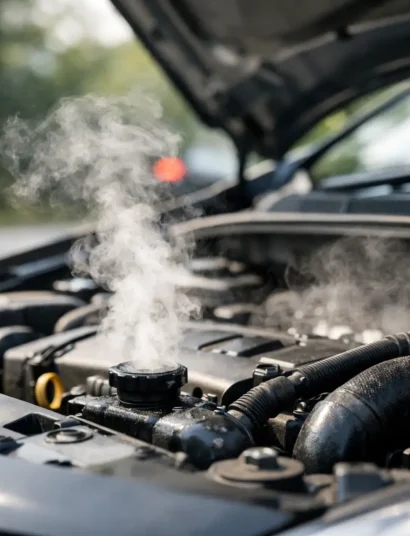
An overheating engine can lose power and stall, particularly if coolant is low or there is a problem with the cooling system. Serious internal engine issues, such as low compression or timing chain problems, can also cause stalling, rough running, and hard starts.
These are less likely to be a quick fix, but early diagnosis can make a difference. If the temperature gauge is high, steam is coming from under the hood, or the oil pressure warning light comes on, pull over safely and turn the engine off. Continuing to drive can turn a repairable issue into major engine damage.
When a Stalling Car Needs Professional Diagnosis
Schedule a diagnostic visit soon if the stalling is recurring, unpredictable, or paired with a warning light. You should also have the vehicle checked if it stalls at highway speeds, loses steering assist, dies after filling up with fuel, or only restarts after cooling down.
A proper diagnosis goes beyond connecting a code reader. A technician may inspect the battery and charging system, scan computer data, check fuel pressure, test ignition components, look for vacuum leaks, and evaluate the throttle body and sensors. The exact process depends on your vehicle’s symptoms, age, mileage, and service history.
For example, a car that stalls only at idle may need a different inspection than one that dies while accelerating. Sharing the full story helps: describe when the problem began, how often it happens, recent repairs, unusual noises, warning lights, and whether the issue occurs with a cold or warm engine.
Simple Ways to Reduce the Risk of Stalling
Routine maintenance cannot prevent every failure, but it gives your vehicle a better chance of running reliably. Follow the recommended schedule for oil changes, air filters, spark plugs, and fluid inspections. Address a check engine light before a minor drivability concern turns into a breakdown.
It also helps to avoid routinely driving on an almost empty tank, particularly if your fuel pump is aging. Keep battery terminals clean, have the charging system checked if starting becomes slow, and do not ignore a rough idle just because the car still gets you home.
A stalling vehicle is your car’s way of telling you something is not working as it should. At Firestone1960, clear diagnostics and honest repair recommendations can help North Houston drivers get back to a safer, more dependable ride without unnecessary guesswork.
Social Share:


No Comment Yet! You can post first response comment.