

06. 25. 2026
Car Battery Replacement Guide for Drivers
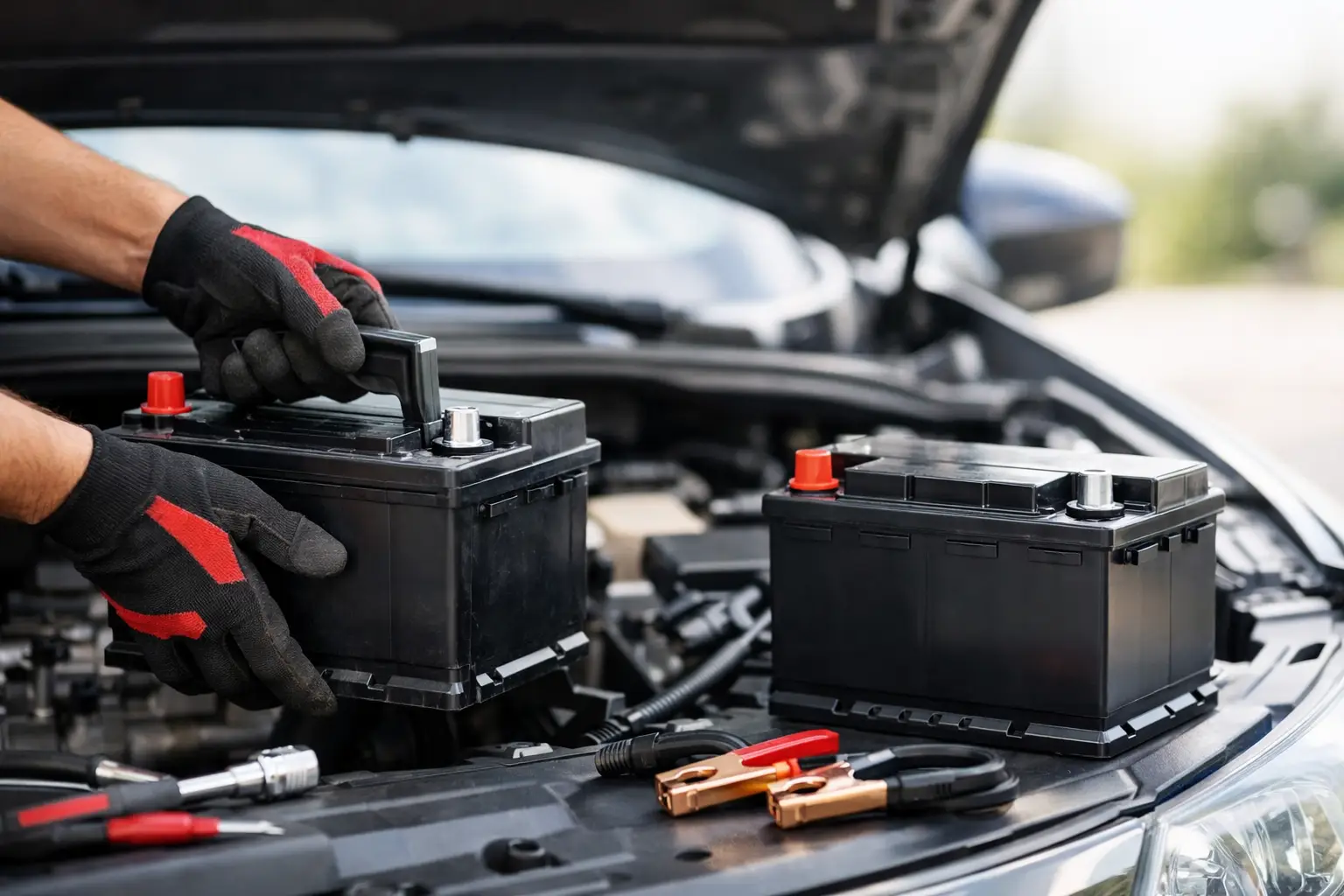
That slow crank on a Monday morning usually does not happen at a convenient time. A good car battery replacement guide helps you catch the warning signs early, understand what is causing the problem, and decide whether you can handle it yourself or should bring your vehicle to a trusted shop.
For most drivers around Houston, battery trouble shows up when life is already busy. You are heading to work, dropping kids off, or trying to get across town in the heat, and suddenly the engine struggles to turn over. The good news is that battery issues usually give some warning before complete failure. Knowing what to watch for can save you from getting stranded.
When a car battery replacement guide matters most
A battery does not usually fail without leaving clues. The most common sign is a slow engine crank, where the starter sounds weaker than normal before the engine fires up. You might also notice dim headlights, power windows moving slower than usual, dashboard warning lights, or electronics acting erratic.
Sometimes the problem is not the battery itself. A weak alternator, corroded terminals, a parasitic drain, or even loose cable connections can create similar symptoms. That is why a proper battery check matters. Replacing a battery that is still good will not fix an underlying charging problem, and that costs you money without solving the issue.
Heat is another factor that North Houston drivers know all too well. Many people assume winter is hardest on batteries, and cold weather absolutely exposes weak ones. But long stretches of Texas heat can shorten battery life by causing internal fluid loss and speeding up wear. A battery may survive summer damage, then finally fail when cooler weather arrives.
How long a car battery should last
Most car batteries last around three to five years, but real life is not always that neat. Driving habits, climate, vehicle electronics, and battery quality all affect lifespan. Short trips are especially tough on a battery because the alternator may not have enough time to fully recharge it after each start.
If your battery is over three years old, it is smart to have it tested during routine maintenance. That is especially true before summer road trips or seasonal weather changes. A quick inspection can reveal corrosion, swelling, weak voltage, or charging issues before they leave you stuck in a parking lot.
Choosing the right replacement battery
Not every battery fits every vehicle, and this is where many DIY replacements go wrong. Your vehicle needs the correct battery group size, proper terminal layout, and enough cold cranking amps to start reliably. Some vehicles also require an AGM battery instead of a standard flooded battery, especially if they have start-stop systems or higher electrical demands.
Price matters, but cheapest is not always best. A lower-cost battery may work fine for a while, but if it does not match your vehicle’s needs or cannot hold up to the climate, you may be replacing it sooner than expected. On the other hand, the most expensive option is not automatically necessary either. The right choice depends on your vehicle, your driving habits, and how long you plan to keep the car.
If you are unsure, this is a good place to ask a professional. A reliable shop can confirm the correct battery type and check whether the charging system is healthy at the same time.
How to replace a car battery safely
If you are comfortable with basic vehicle maintenance, battery replacement can be manageable. Still, safety comes first. Batteries contain acid, can produce explosive gases, and modern vehicles often have sensitive electronics that do not react well to mistakes.
Before you begin, make sure the engine is off, the keys are removed, and you are parked on a level surface. Wear gloves and eye protection. Then locate the battery and inspect the area around it. Some batteries are easy to access under the hood, while others are tucked under covers, near the firewall, or even in the trunk.
Start by identifying the negative terminal, usually marked with a minus sign or black cable, and disconnect that first. Then disconnect the positive terminal. This order reduces the chance of accidental shorting. Remove the hold-down bracket or clamp, then carefully lift the battery out. Car batteries are heavier than many people expect, so use care.
Before installing the new battery, inspect the terminals and cable ends for corrosion. If there is buildup, clean it properly so the new battery gets a strong connection. Place the new battery in the tray, secure it with the hold-down hardware, and connect the positive terminal first, then the negative terminal.
That said, the basic steps are not the whole story. Some vehicles may lose radio presets, clock settings, transmission memory, or idle settings when power is disconnected. Others may need battery registration or system resets after installation. On newer vehicles, that detail matters. If your car has advanced electronics, replacing the battery without the right procedure can create avoidable issues.
Common mistakes to avoid
The biggest mistake is assuming the battery is the only problem. If the alternator is undercharging or a hidden electrical draw is draining power overnight, the new battery may end up dead too.
Another common issue is reversing the terminals. Even a brief mistake there can damage fuses, modules, or the charging system. Installing the wrong battery size or failing to secure the battery properly can also cause vibration damage and premature failure.
Corrosion is often overlooked as well. If the terminals are dirty or the cable ends are worn out, your vehicle may still start poorly even with a brand-new battery.
Signs you should let a shop handle it
Some battery replacements are straightforward. Others are not worth the risk unless you have the tools and experience. If your battery is hard to access, the terminals are badly corroded, the vehicle needs system programming, or you are not fully confident in the diagnosis, professional service is the safer move.
This is especially true if your car has been showing multiple electrical symptoms. Flickering lights, battery warning lights, repeated jump-start needs, or intermittent no-start conditions can point to a larger issue. In those cases, a full diagnostic check is more useful than swapping parts and hoping for the best.
At a full-service neighborhood shop like Firestone1960, battery service should include more than installation. It should involve testing the battery, checking the alternator output, inspecting cables and terminals, and making sure the charging system supports the new battery properly. That kind of complete approach helps prevent repeat visits for the same problem.
How to get more life from your next battery
Once your new battery is installed, a few habits can help it last longer. Keep the terminals clean, make sure the battery is tightly secured, and avoid leaving lights or accessories on when the engine is off. If you do a lot of short trips, occasional longer drives can help recharge the battery more fully.
It also helps to stay ahead of routine maintenance. If your alternator belt is worn, your charging system is weak, or your electrical system has a drain, your battery ends up doing more work than it should. A healthy vehicle gives the battery a much better chance at a full service life.
If your vehicle sits for long periods, battery maintenance becomes even more important. Cars that are rarely driven often develop weak batteries simply because they are not being charged consistently. In that case, regular testing or a battery maintainer may make sense.
Battery replacement is simple until it is not
A lot of drivers look at battery replacement as a quick errand, and sometimes it is. But when you factor in modern electronics, charging system problems, extreme heat, and the risk of installing the wrong battery, it becomes clear that there is some judgment involved.
That is really what a good car battery replacement guide should do. It should not just tell you how to remove one battery and drop in another. It should help you understand when the battery is truly the issue, when another repair may be needed, and when a professional inspection can save time and money.
If your vehicle has been cranking slowly, showing electrical issues, or running on an older battery, do not wait for a complete failure to force the decision. A simple battery test today is a lot easier than being stranded tomorrow.
Social Share:



No Comment Yet! You can post first response comment.