

09. 17. 2026
How to Check Tire Pressure for a Safer Ride
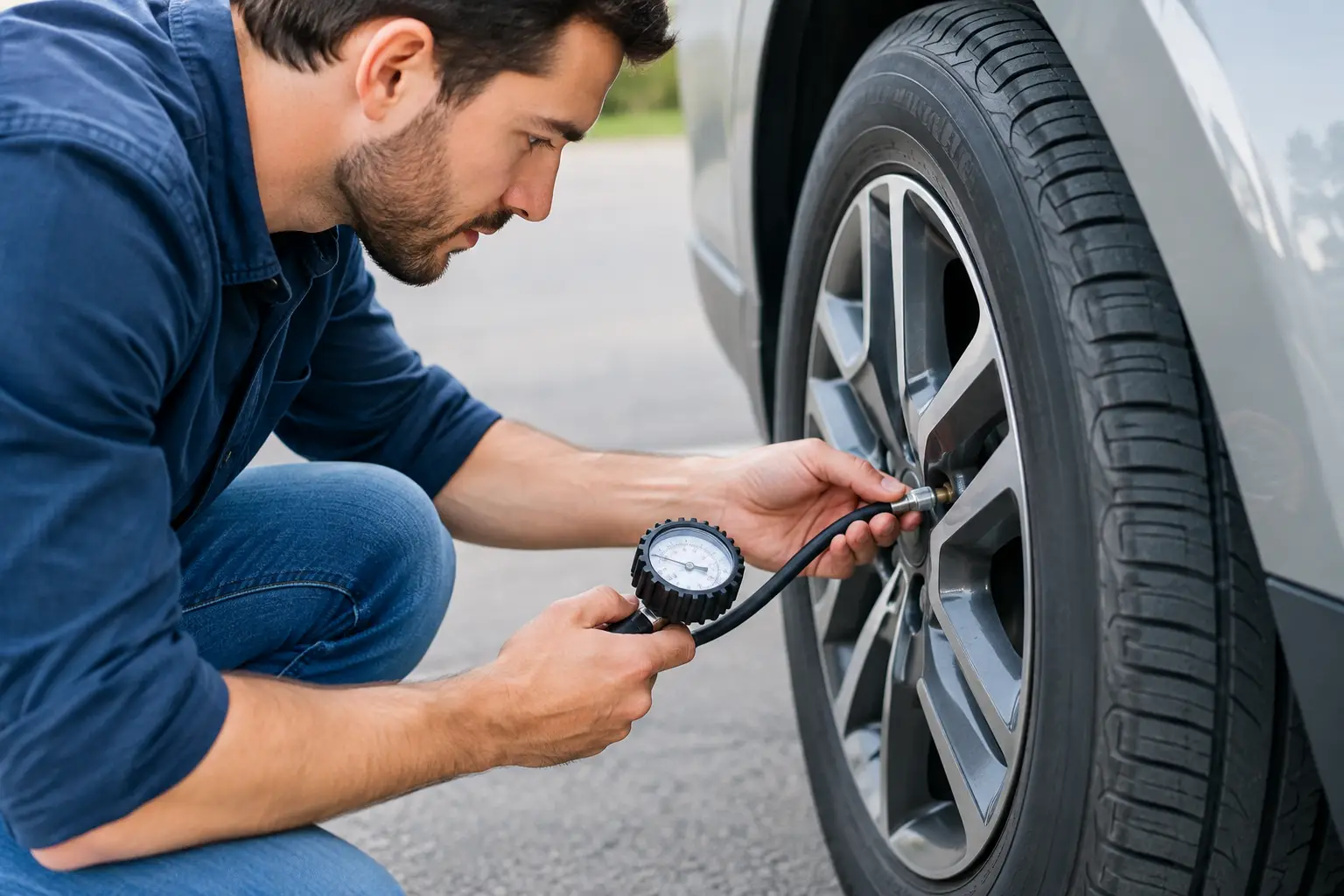
A tire can lose pressure gradually enough that you may not feel the change on your morning commute. But when Houston heat, potholes, construction zones, and daily highway miles are part of the routine, knowing how to check tire pressure is one of the simplest ways to protect your vehicle, your fuel budget, and your family.
The good news is that it takes only a few minutes. The key is checking at the right time, using the correct PSI number, and knowing when a low tire could point to a bigger problem.
Why Tire Pressure Deserves Your Attention
Your tires are the only part of your vehicle designed to stay in contact with the road. When they are underinflated, more of the tire touches the pavement. That extra contact creates heat and resistance, which can reduce gas mileage and wear out the outer edges of the tire faster.
Overinflated tires create a different problem. They can make the ride feel harsher, reduce the tire’s contact patch, and cause faster wear down the center of the tread. They may also be more vulnerable to damage from rough roads and potholes.
Correct tire pressure supports better handling, more even tire wear, responsive braking, and a smoother ride. It also gives your tires the best chance of delivering the mileage they were built to provide. For a working driver, busy parent, or regular commuter, that can mean fewer avoidable tire expenses over time.
Find the Right PSI for Your Vehicle
Before adding or releasing air, make sure you are using your vehicle manufacturer’s recommended pressure. Look for the tire information placard, usually located on the driver’s door jamb. Depending on the vehicle, it may also be inside the fuel door or in the owner’s manual.
The placard lists the recommended PSI for the front and rear tires. Some vehicles use the same number all around, while others call for different pressures on the front and rear axles. Follow the placard, especially if you are driving a truck, SUV, or vehicle that carries passengers and cargo regularly.
Do not use the number printed on the tire sidewall as your target pressure. That number shows the tire’s maximum allowable pressure, not the recommended pressure for your specific vehicle. Inflating to the sidewall maximum can affect ride quality, traction, and tire wear.
How to Check Tire Pressure Correctly
A basic pencil-style gauge works, but a quality digital tire gauge is usually easier to read and more consistent. Many air pumps have built-in gauges, though having your own gauge gives you a reliable way to double-check the reading.
For the most accurate result, check your tires when they are cold. That generally means the vehicle has been parked for at least three hours or has been driven less than a mile. Driving builds heat inside the tire, and warm air expands, which can make the pressure reading higher than it truly is.
To check each tire:
- Remove the valve cap from the tire’s air valve and keep it somewhere clean.
- Press the gauge firmly and straight onto the valve stem until the hissing sound stops.
- Read the PSI measurement on the gauge.
- Compare that number with the recommended cold PSI on the driver’s door placard.
- Add air slowly if the tire is low, or release a small amount if it is overinflated.
- Recheck the pressure, then replace the valve cap securely.
Repeat this process for all four tires. If your vehicle has a full-size spare, check that as well. A spare does not help much during a roadside emergency if it has been sitting flat in the cargo area for months.
How Often Should You Check Tire Pressure?
Checking tire pressure once a month is a smart baseline for most drivers. You should also check it before a road trip, before carrying a heavier-than-usual load, and whenever the weather changes significantly.
Temperature has a real effect on tire pressure. As a general rule, tire pressure can change by about 1 PSI for every 10-degree shift in outside temperature. North Houston drivers may notice this most when a cool front arrives or when a hot stretch of summer weather settles in. A tire that looked fine a few weeks ago can become low without any visible damage.
It is also worth checking pressure after striking a pothole, curb, or road debris. Even if the tire does not go flat immediately, an impact can damage the tire, wheel, or valve stem.
What the Tire Pressure Warning Light Means
If the tire pressure monitoring system, or TPMS, light comes on, do not assume it is safe to ignore. The system is telling you that one or more tires are significantly below the expected pressure, or that there may be a sensor issue.
Start by checking all four tires with a gauge. The warning light may not identify the exact tire on every vehicle, and a tire can look normal even when it is low. Inflate each tire to the recommended cold PSI, then drive the vehicle for a short distance to see whether the light resets.
If the light stays on, flashes, or returns soon after you add air, the vehicle should be inspected. You could have a nail in the tread, a leaking valve stem, wheel damage, a failing TPMS sensor, or a slow bead leak where the tire meets the wheel.
Signs You May Have More Than a Low Tire
Adding air occasionally is normal. Tires naturally lose a small amount of pressure over time. However, if you need to add air to the same tire every week or two, there is likely a leak that needs attention.
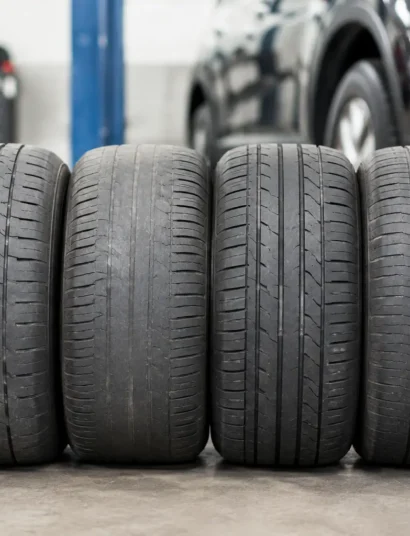
Watch for a vehicle that pulls to one side, a steering wheel vibration, uneven tread wear, or a tire that appears noticeably lower than the others. These symptoms do not always mean low pressure alone. They may point to an alignment issue, worn suspension components, wheel damage, or an internal tire problem.
A tire repair is often possible when the puncture is small and located in the repairable tread area. Damage near the sidewall, a large puncture, or a tire driven while severely underinflated may require replacement instead. That is why catching a pressure problem early matters.
Pressure, Tire Wear, and Wheel Alignment Work Together
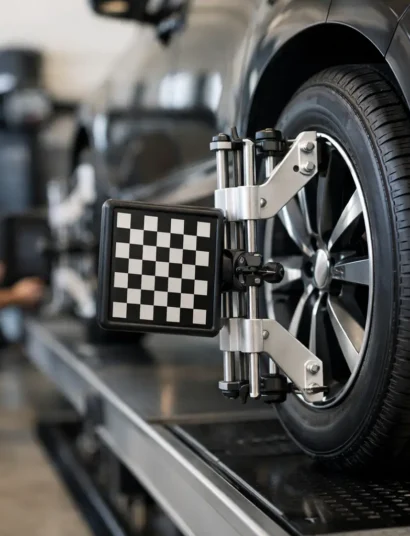
Proper inflation does not replace tire rotations and wheel alignments. These services work together to help your tires wear evenly and last longer.
If the front tires wear faster along one edge, for example, adding the correct air may not solve the issue if the alignment angles are out of specification. Similarly, rotating tires on schedule helps distribute wear across all four positions, especially on front-wheel-drive vehicles where the front tires handle steering, braking, and power delivery.
A technician can inspect tread depth, wear patterns, wheels, tire sidewalls, and suspension components while addressing a pressure concern. That complete look is often more valuable than simply filling a low tire and moving on.
When to Let a Professional Check Your Tires
If you are uncertain about your recommended PSI, cannot find a leak, or see uneven wear, it is time for a professional inspection. A shop can test for slow leaks, inspect the tire from the inside when needed, verify TPMS operation, and check whether your wheels are balanced and aligned.
At Firestone1960, our team helps North Houston drivers make practical decisions about tire repair, replacement, rotations, alignments, and routine maintenance. We explain what we find clearly, so you can understand the condition of your vehicle without pressure or guesswork.
A few minutes spent checking your tires can prevent a frustrating flat, help your vehicle handle the road with confidence, and keep a small concern from becoming an expensive one.
Social Share:



No Comment Yet! You can post first response comment.